Why Is It Important to Manage Deer Populations?
White-tailed deer are common in North America, including New Jersey. They live in forests, grasslands, fields, wetlands, and suburban areas. Deer populations have grown significantly due to changes in the environment and hunting regulations. When deer populations are too high, they can harm ecosystems.
Ecological Impacts
- Plant Damage: Deer eat native plants, reducing numbers and disrupting ecosystem balance.
- Forest Health: Heavy browsing by deer can prevent plants from growing back and suppress natural forest succession.
- Habitat Loss: Deer browsing reduces the variety and density of plants, affecting other animals that rely on these habitats.
- Invasive Species: Deer avoid certain plants, leading to an increase in non-native species.
Economic Impacts
- Crop Damage: Deer can heavily damage agricultural crops.
- Landscape Damage: In suburban areas, deer often eat ornamental plants.
Human Health & Safety
- Vehicle accidents: Over 15,000 deer-vehicle collisions occur yearly in NJ.
- Tick-born Illnesses: Dense deer populations increase community Lyme disease rates, as deer are key hosts for the ticks that carry it.
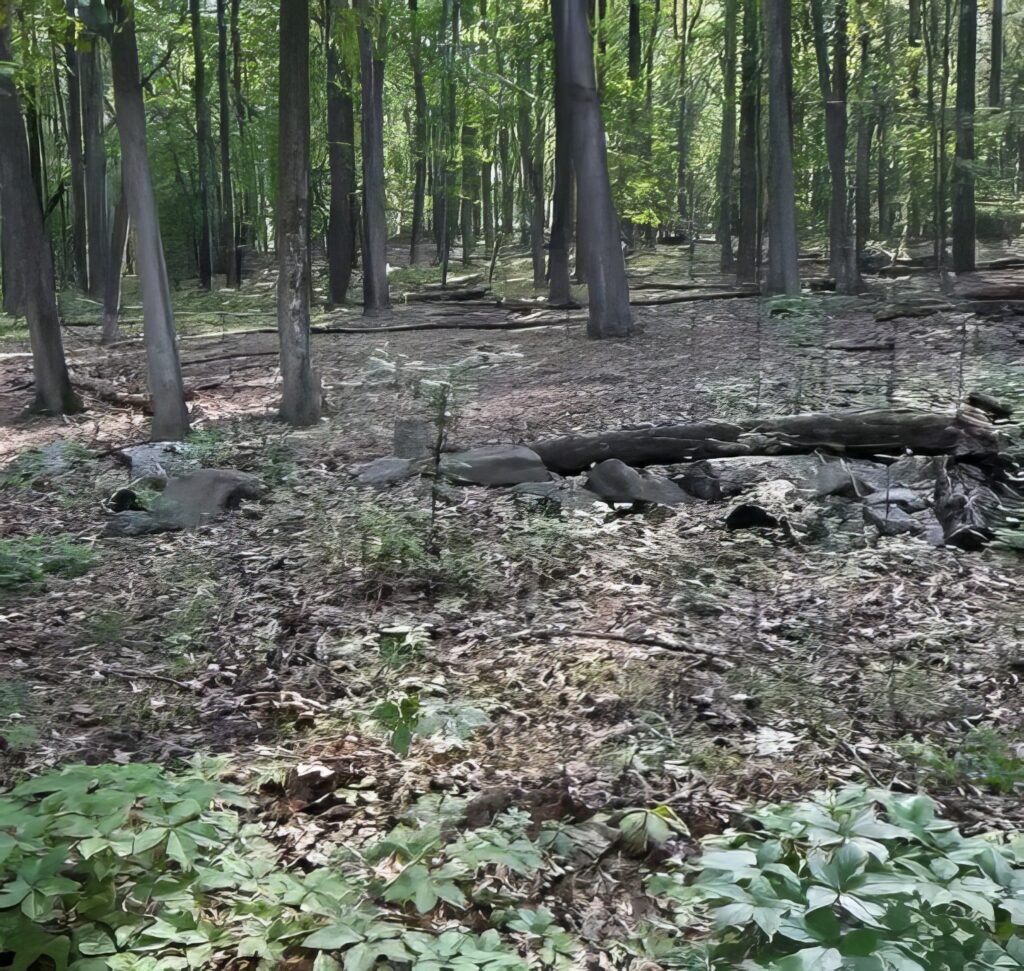
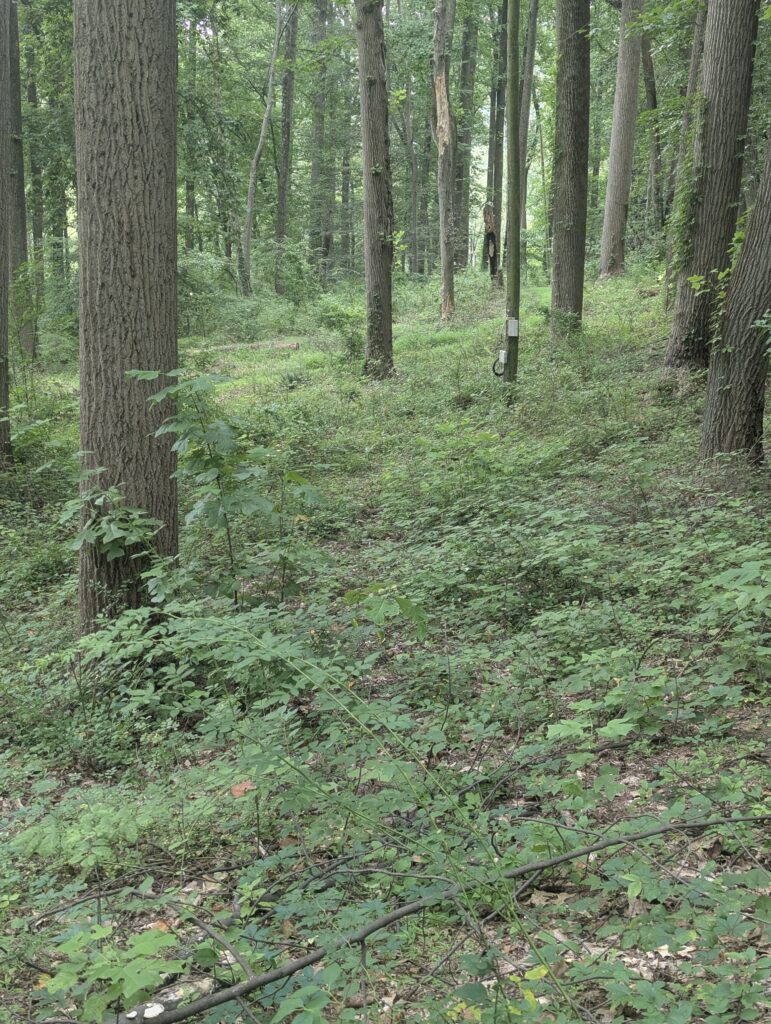
How Can I Tell if a Forest is Being Impacted by Deer Browse?
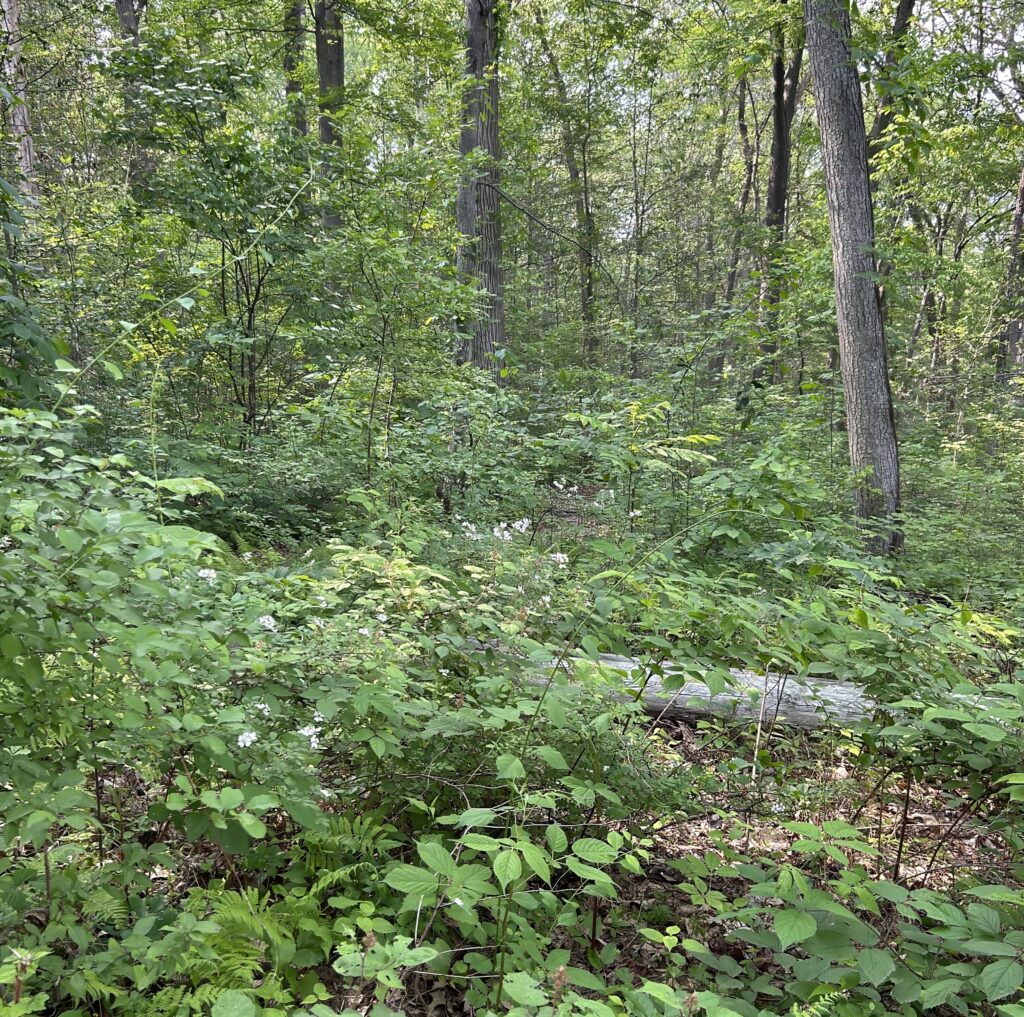
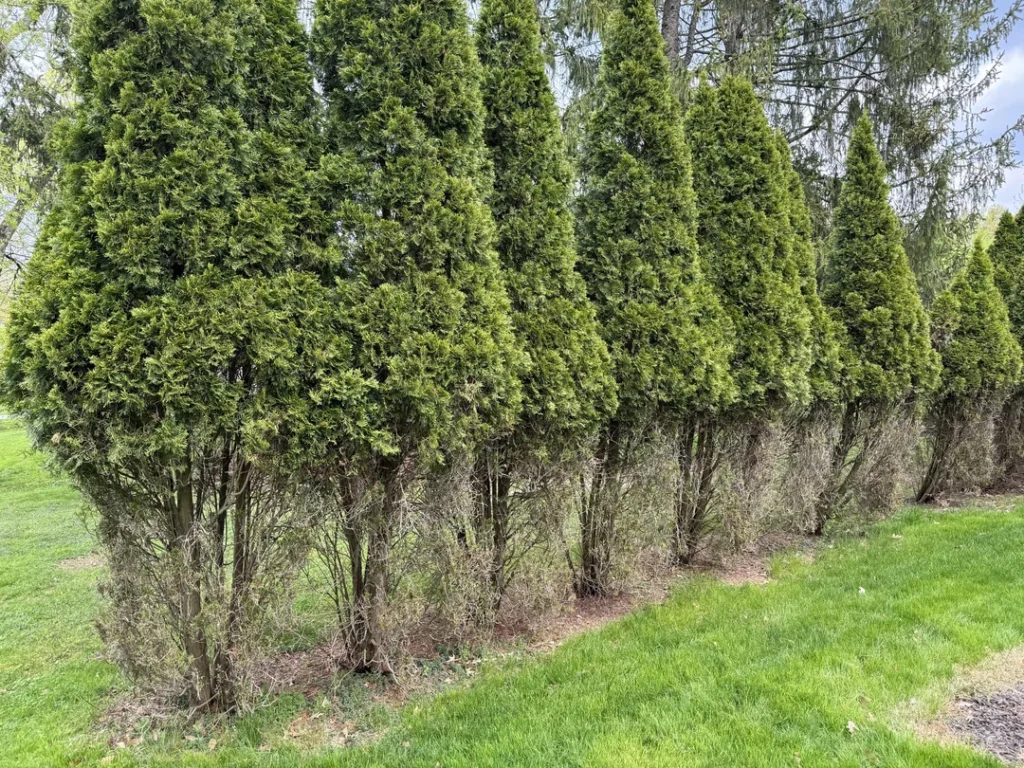
- Lack of vegetation up to 5 feet above the ground, known as a “browse line”
- Dominance of unpalatable plants like ferns
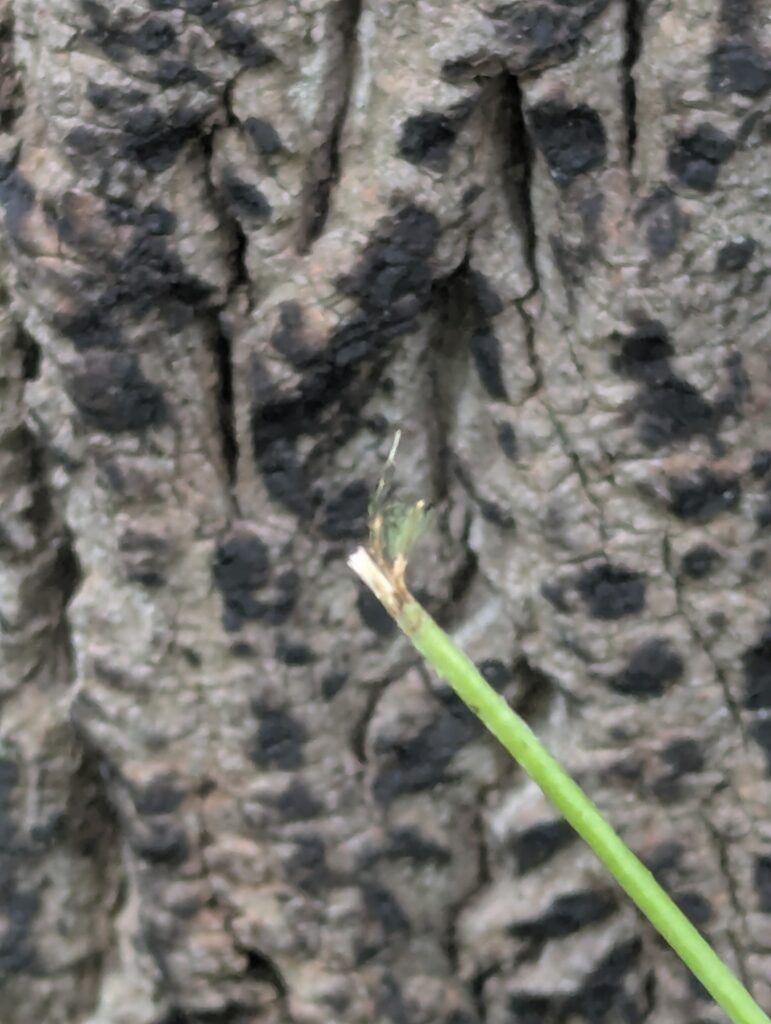
- Chew marks on plants
- Lack of plant diversity
- Heavy presence of invasive plants like barberry & multiflora rose