The Box Turtle
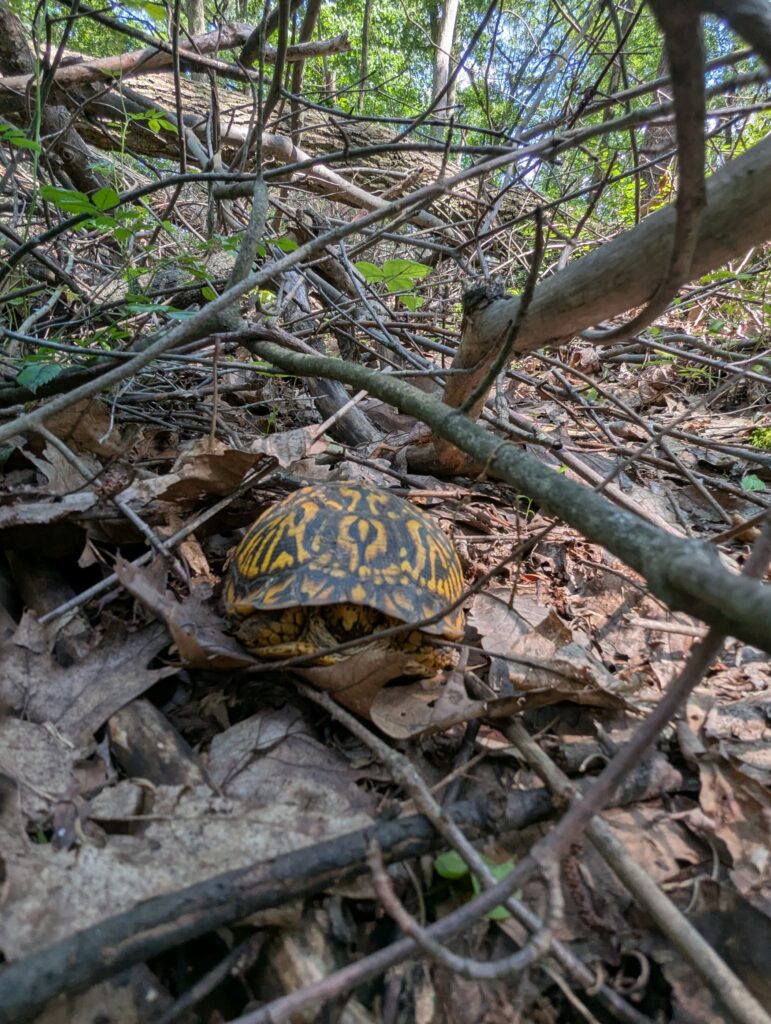
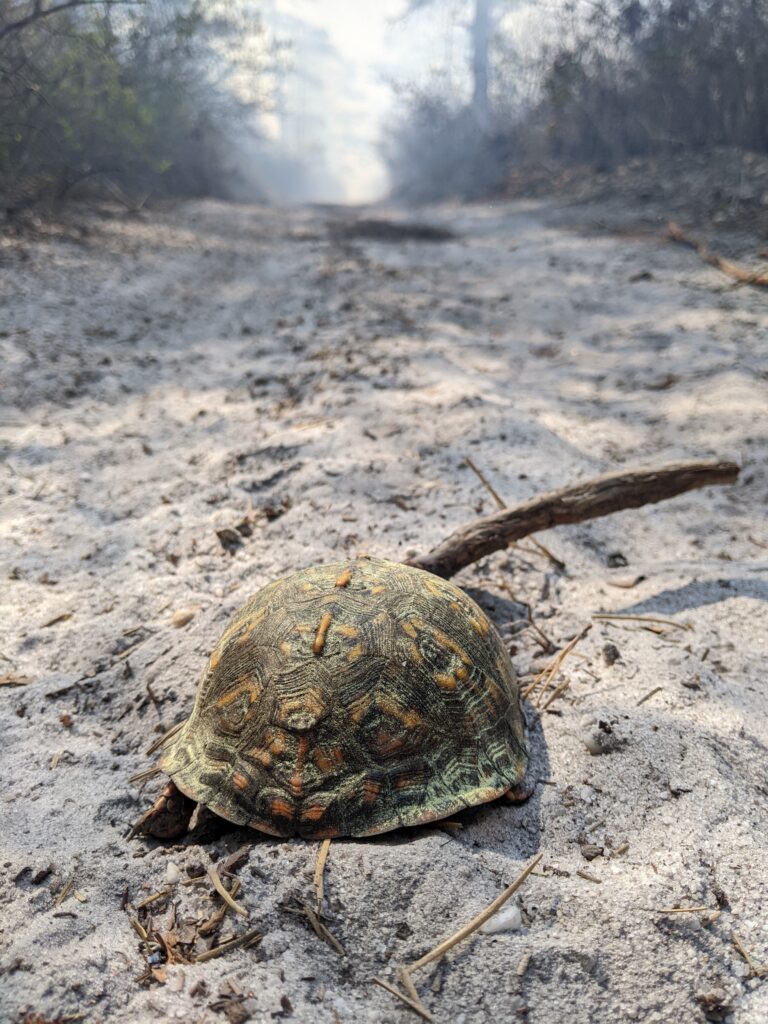
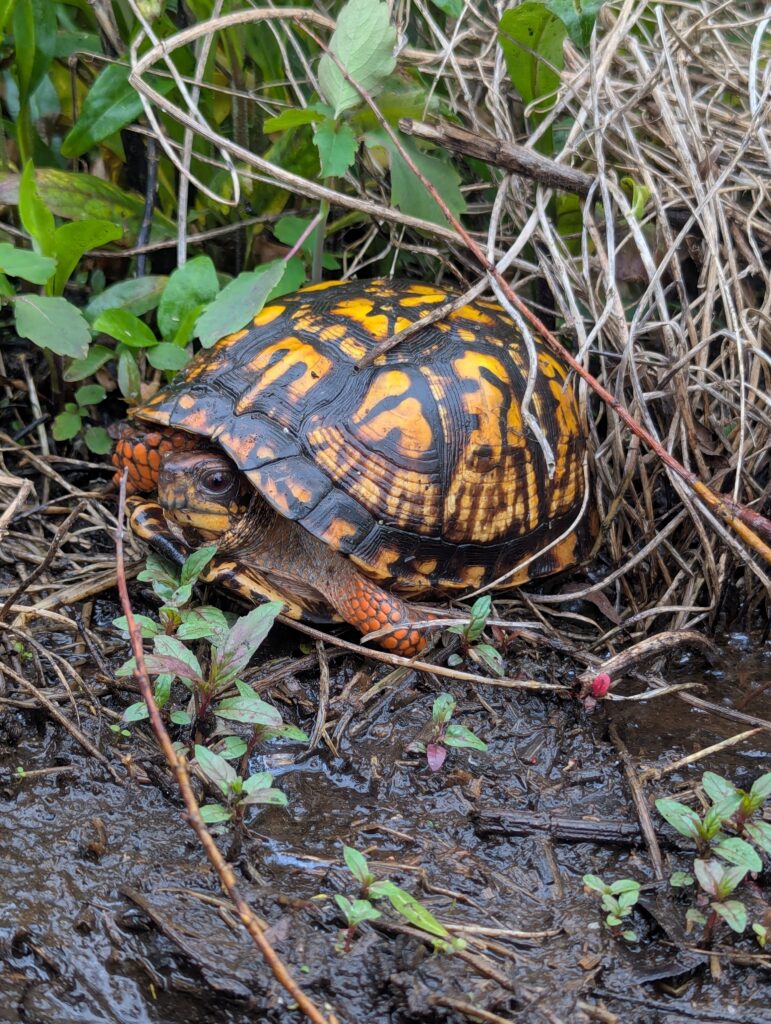
Woodland box turtles (Terrapene carolina carolina) are an iconic backyard visitor—quiet, boldly colored, and full of surprises. New Jersey Audubon’s stewardship team encounters box turtles frequently (albeit unexpectedly) as we are out controlling invasives species, managing forests, and surveying for bog turtles and swamp pink. A particularly interesting observation was made during a prescribed burn; a box turtle avoided the low creeping flames moving through the NJ Pine barrens by taking refuge on a nearby firebreak. While this turtle was likely glad to find the firebreak prepared, they also have several options to avoid the flames of prescribed burns and wildfires, seeking refuge in wetlands, hollow logs, or burrowing into sandy soil.
Where do they live?
Box turtles can be found throughout New Jersey and thrive in variety of vegetative communities, from wetlands to dry upland forests and woodlands. They have home ranges as small as twenty acres, relying on a patchwork of vegetation types to seek out cover, foraging areas, open basking areas, and cool moist areas to retreat from the summer heat. Their adaptable and resilient nature drives them to adapt to an ever-changing landscape. You never know where they may pop up, mucky swamps, upland pine forests, a long-abandoned home site, or your backyard!
What do they eat?
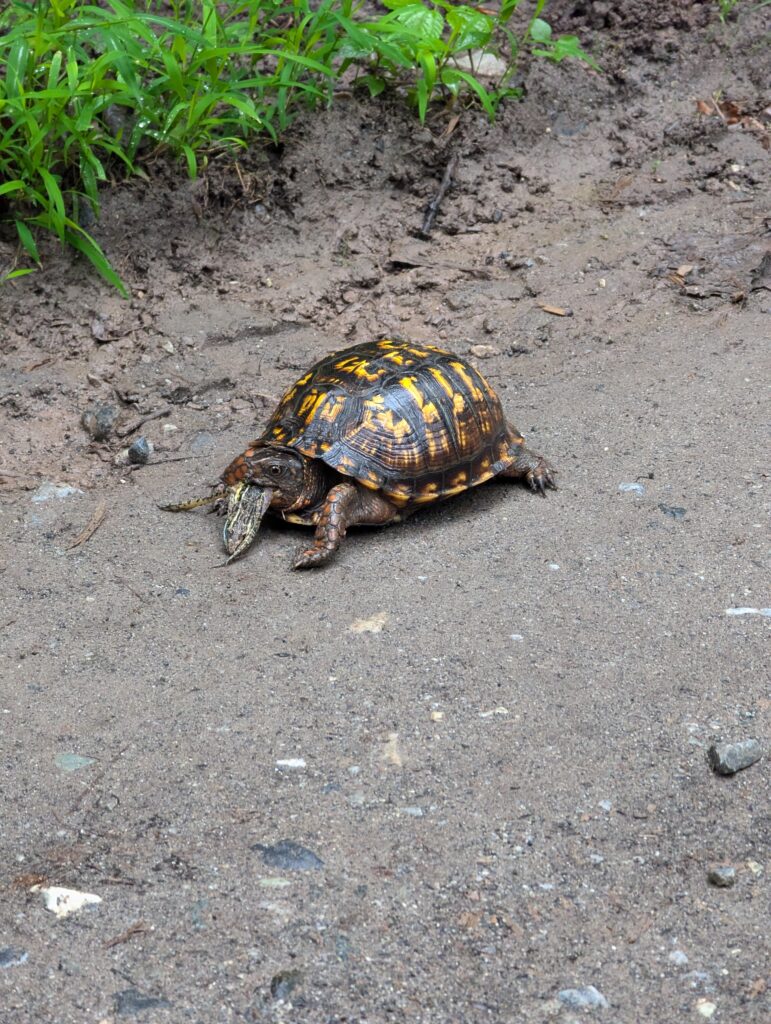
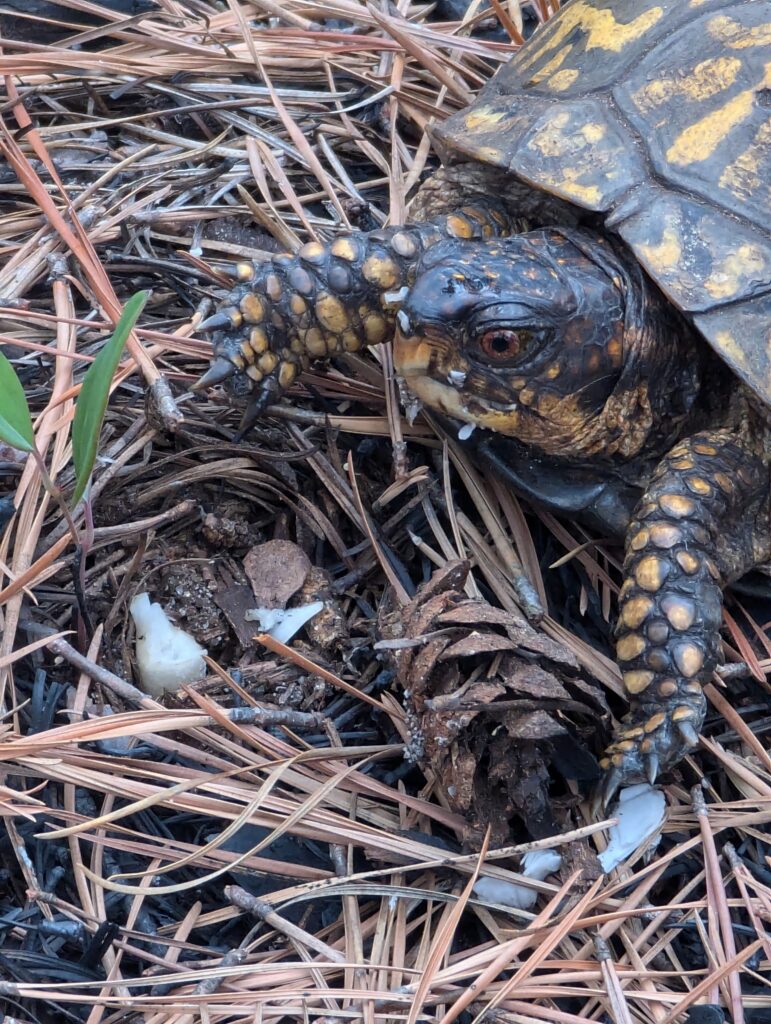
These adaptable turtles are true generalists. They snack on everything from berries, mushrooms, and acorns to insects, slugs, and even small amphibians. While they aren’t likely to be spotted chasing down healthy adult frogs and salamanders, they are opportunists and will take advantage of injured or dead prey.
What threatens them?
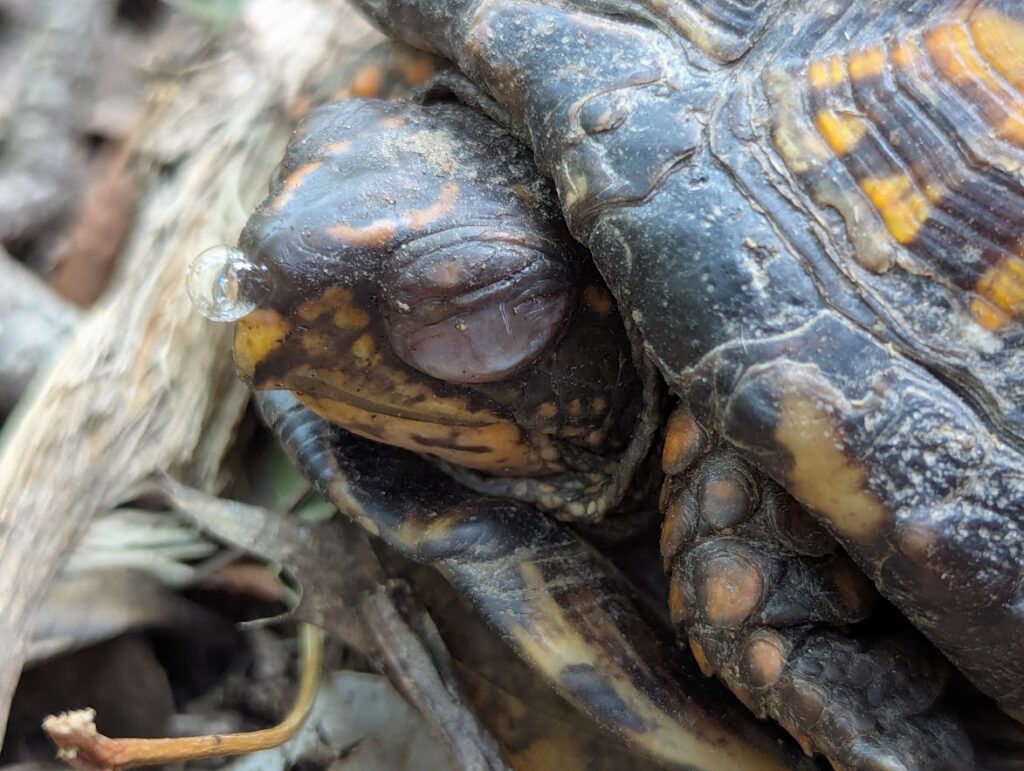
Woodland box turtles are a Special Concern Wildlife Species in the state of New Jersey. They are impacted by roads, diseases such as Ranavirus, habitat degradation and fragmentation, increased predator abundance, and poaching. Symptoms of respiratory viruses include swollen eyelids, obscured vision, and labored breathing. Many box turtles are hit attempting to cross roadways every year. During the spring and summer, pay special attention when driving through forested areas. If safe to do so, you can pull over and help the turtle by moving it across the road in the direction it was facing. Box turtle sightings can be reported to NJ’s Division of Fish and Wildlife through the NJ Wildlife tracker tool (NJDEP| Fish & Wildlife | Reporting Wildlife Sightings). Sightings of turtles crossing roads are of particular importance as this can help inform the placement of wildlife crossings that benefit a wide variety of species.
How you can help:
Turn your property into a turtle-friendly haven!
- Food: Plant a diversity of native species to provide a variety of fruits, seeds, foliage and attract insects. Leave some leaf litter or brush piles—these attract a buffet of slugs and other invertebrates.
- Cover: Provide a mix of shade and sunlight. Shrubs, low plants, and large woody debris offer protection from predators. Forest owners can leave fallen or felled tree trunks and tops in place as natural cover.
- Water: Add a shallow, gently sloped water source so turtles can safely drink and cool off—avoid steep-sided ponds where they could get trapped.
Small steps like these help protect these fascinating creatures. Keep an eye out—you never know when a box turtle might wander through your yard!