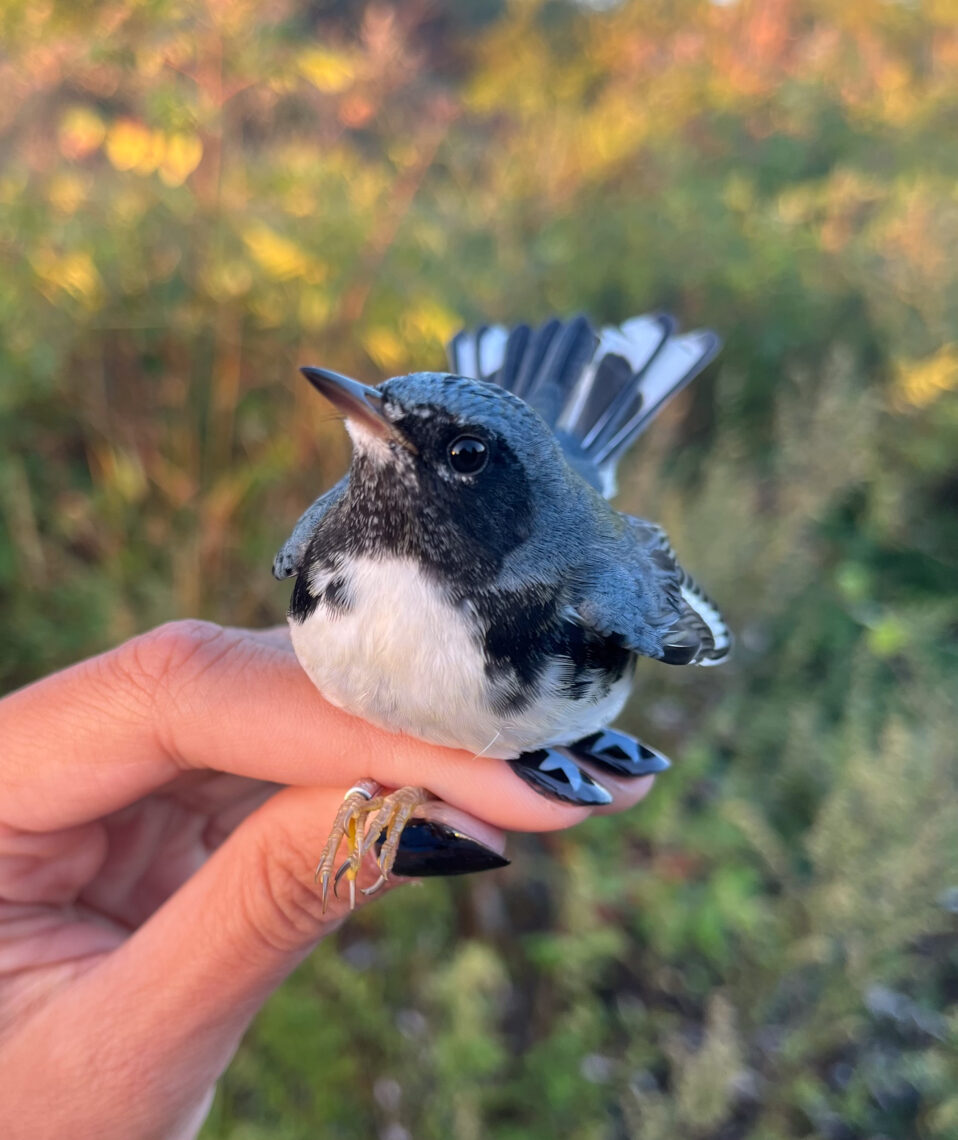
If you’ve ever wondered what a wildlife haven looks like along the coast of the Delaware Bay in Cumberland County, you’ve never been to Cohansey Meadows Farms where there is no shortage of American Black Ducks, Diamondback Terrapins, Bald Eagles galore, all amongst several other species of birds, waterfowl, reptiles, and mammals. Located in Fairfield Township, Cohansey Meadows Farms is comprised of hundreds of acres of sprawling native grass meadows, high and low tidal marsh, and maritime forests managed by the Zander Family for salt hay production, wildlife habitat, and forest stewardship—a perfect example of where agricultural production and prime wildlife habitat interface. Although, the farm hasn’t always been what it is today…
Before the Zander Family began leasing the property in the early 90s, and officially purchased in 1997, the ground was farmed following the classic corn, bean, and hay rotation. You may be thinking, “how on earth was anyone ever farming that close to the salt marsh”? The answer is: hydrologic alterations. These alterations can include, but are not limited to tile drainage, agricultural ditches, berms, dikes, and levees, all designed to divert and impede water flow to and from fields to benefit crop production. Even with these alterations in place, the increasing levels of saltwater intrusion eventually made fields unworthy for traditional farming. The Zander Family, however, saw this as an opportunity to take advantage of the salt hay market.
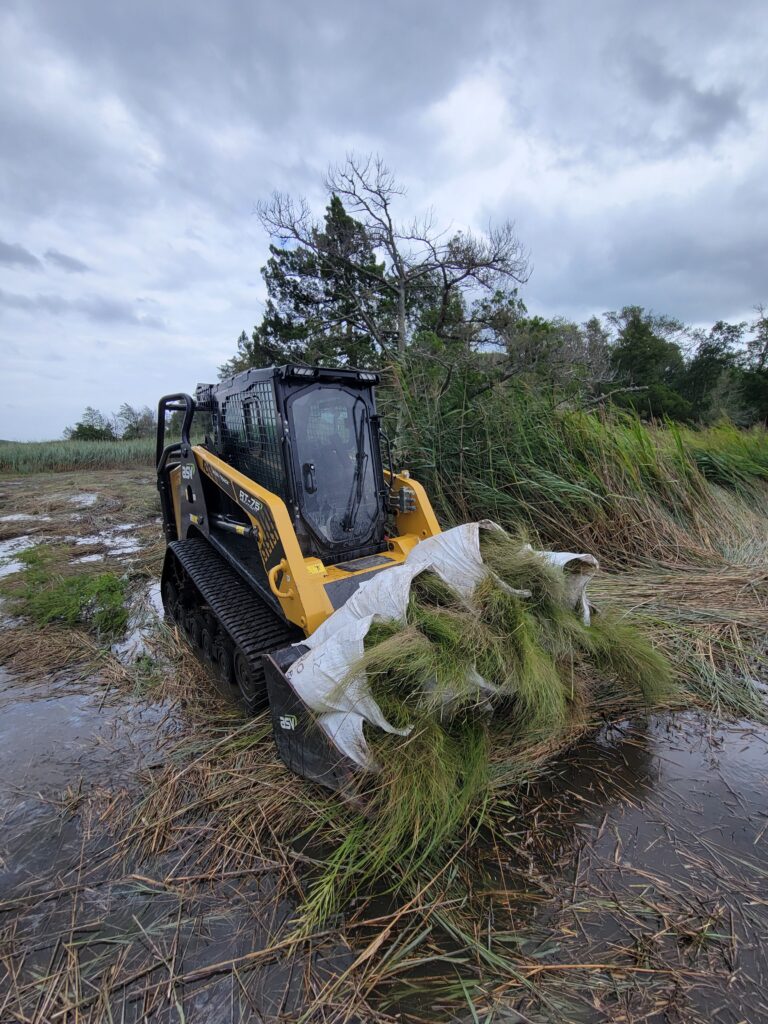
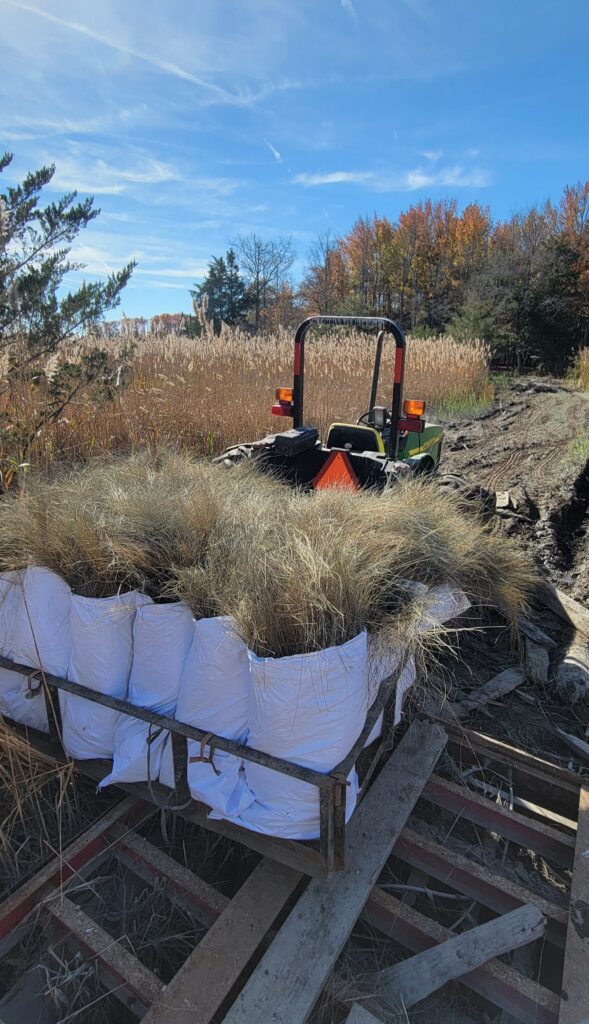
Salt hay (Spartina patens), also known as saltmeadow cordgrass, is a low and thick growing grass that is salt-tolerant and native to coastal marshes. It can be used for a variety of purposes from serving as a mulch or weed barrier in agricultural operations as it is highly resistant to rot, to shoreline protection and dune stabilization as dense stands have an incredible capacity to capture suspended solids from contaminated waters, to providing a lush source of food and habitat for wildlife. Cohansey Meadows is one of the few places where all the conditions are right for this crop, so they have been awarded a Conservation Innovation Grant (CIG) from the USDA-Natural Resources Conservation Service (NRCS), the Spartina patens Saltwater Intrusion Initiative. Through this project, Cohansey Meadows is piloting different planting and harvest methods of salt hay crops to better understand how we can take advantage of increasing saltwater intrusion conditions rather than fighting them for both agricultural production and conservation efforts.
This all may sound too good to be true. Well, the truth is maintaining this production system hasn’t always been easy for Cohansey Meadows. The hydrologic alterations installed by previous landowners in combination with other environmental factors have encouraged competition from invasive species in the salt hay system, particularly from Phragmites australis, known as phragmites or “phrag”. Phragmites is also a detriment to native wildlife that live in these salt marsh ecosystems as it does not provide a nutrient dense source of food or prime nesting and resting habitat that a native alternative like High Tide Bush (Iva frutescens) or Northern Bayberry (Morella pensylvanica) does. Hydrology altering activities on the farm mostly take the form of berms and ditches, as determined during aerial image review and on-site field inspections. Phragmites is a fringe species, meaning that it can live on the edge between fresh and saltwater systems, with a preference for fresh water—so, these alterations have impacted the farm and encouraged phragmites growth mainly in the form of restricting natural tidal saltwater flow that would have naturally reduced populations through the pure salinity if left alone.
This is where the Zander Family’s conservation mindset has come in handy. The Zanders are currently exploring opportunities for tidal wetland restoration and permanent protection through the Wetlands Reserve Easement (WRE) program offered by NRCS. In a nutshell, the intent of WRE is to take fields and wetlands that are not operating as healthy, functional wetlands due to previous manipulation for agricultural purposes, and restore hydrologic features recreating the healthy and properly functioning wetlands the fields once were determined upon historic aerial imagery, soil investigations, and other field indicators such as hydrophytic vegetation emerging from the native seedbank. Strategically breaching berms and plugging ditches as designed by an engineer, could help the Zanders reintroduce tidal flow to portions of the farm which would control the phragmites, improve habitat for American Black Duck and other saltwater coast and tidal wildlife species, all while exponentially increasing the capacity for salt hay regeneration and production.
But wait—there’s more where that came from. In addition to being the recipient of a CIG and exploring WRE potential, the Zander Family has also tackled upland habitat conservation including grassland restoration and forest health improvement efforts through other Farm Bill conservation assistance programs offered by NRCS, the Environmental Quality Incentives Program (EQIP) and the Conservation Stewardship Program (CSP). EQIP is designed to provide landowners with technical assistance to address natural resource concerns created by land management activities over time through conservation practice implementation while CSP is designed to take those conservation practices to the next level through enhancements. Through these programs, Cohansey Meadows has implemented native tree and shrub plantings, native warm season grass plantings, and invasive species control including Autumn Olive (Elaeagnus umbellata) and Japanese Honey (Lonicera japonica) following their active state approved Forest Stewardship Plan with many more goals on deck.
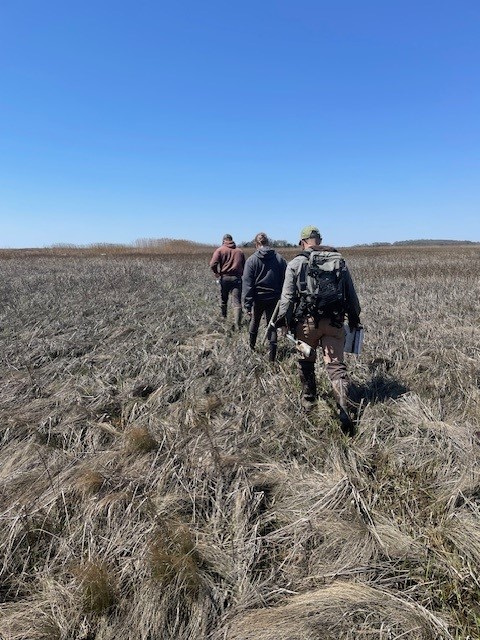
As you may have gathered, the Cohansey Meadows operation is centered around a conservation mindset ensuring the long-term sustainability of their salt hay operation and its coexistence with ecologically critical salt marsh wildlife habitat. When asked what conservation meant to them, Cohansey Meadows, without second thought, responded, “People are tied to the land and an integral part of the cycle of nature. We have a responsibility to steward the land returning things to their natural state and find the balance between production, agrobusiness, and sustainability”, perfectly describing the foundation of their operation.
If you would like to learn more about natural resource and wildlife conservation on your property, please contact Alyssa at [email protected].
By: Alyssa Megonigal, Stewardship Specialist- Agriculture & Wetlands, New Jersey Audubon