By Scott Barnes, Senior Naturalist – Cape May Bird Observatory
Our birding began at the Appoquinimink River bridge outside Odessa, where we watched a small group of Cliff Swallows back there for another breeding season. The weather was beautiful, with blue skies, light winds, and warm temperatures as we traveled south along the western shore of Delaware Bay.
Bombay Hook NWR’s emblematic American Avocets didn’t disappoint, with many birds in bright alternate plumage, their necks and heads glowing a burnt orange color. There were thousands of shorebirds present—mostly Dunlin, both Yellowlegs, and Black-bellied Plovers. Out in the distance on the Leatherberry Flats we were able to see two American Golden-Plovers. One was in striking mostly alternate plumage. A cruise through the refuge’s uplands revealed several spring arrivals including Great Crested Flycatcher and a singing male Hooded Warbler.
The weather began to turn on Saturday; we took advantage of the few morning hours of sunshine, birding some brackish wetlands and swamp forests inland. Several gorgeous Prothonotary Warblers were singing and defending territories. A male Summer Tanager showed well as he sang from a stand of pines. A streamside stop revealed a pair of White-eyed Vireos building a nest in a roadside vine tangle while a Louisiana Waterthrush hunted insects, bobbing and swishing its tail.
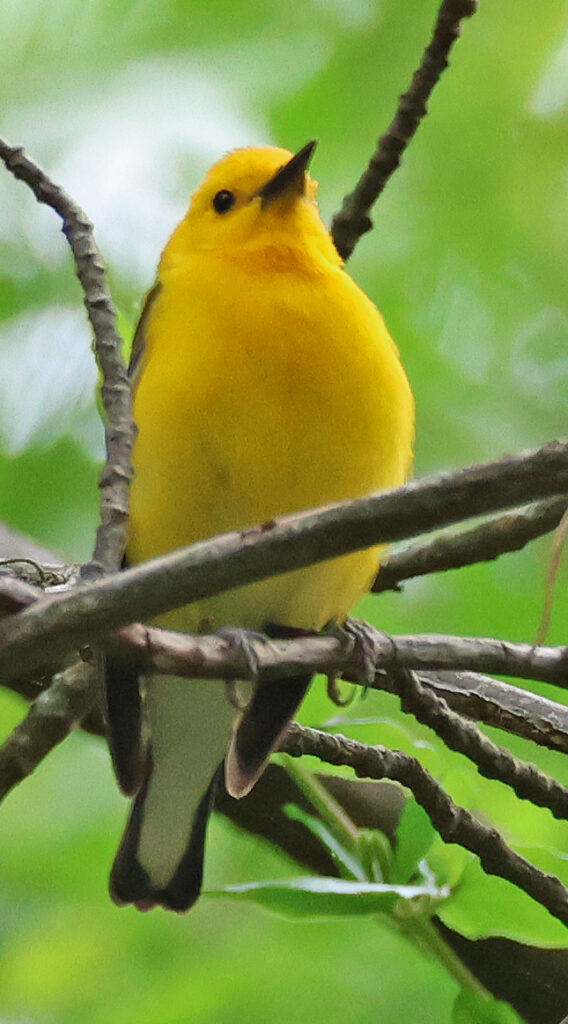
Prothonotary Warblers brighten any day you get to see one. The name comes from high-ranking Catholic scribes who wore bright yellow robes that approximates the bird’s glowing golden coloration. Photo by Linda Mack.
We returned to Chincoteague as the weather started to turn overcast with a stiff northeasterly wind. Brown-headed Nuthatches can be tough to see well, often staying in the crowns of towering loblolly pines; they are slightly smaller than the pine cones they often investigate for food. With a little patience and persistence, we were able to see several well and enjoyed their “rubber ducky” calls and namesake. Easier to spot was a Yellow-throated Warbler moving lower in the trees.
The weather continued to deteriorate with drizzly, damp, and chilly conditions; we made the best of it by concentrating on waterbirds that included iconic mid-Atlantic species such as Black-necked Stilt, Marbled Godwit, Royal Tern, Tricolored Heron, and Brown Pelican. There were a few rarities hiding around Chincoteague’s impoundments including a Little Gull and Ruff—unfortunately, we couldn’t find them despite repeated searches. A good consolation prize was watching a close flock of iridescent Glossy Ibis capturing food morsels with their long curved bills; this species can often be jumpy and not so confiding.
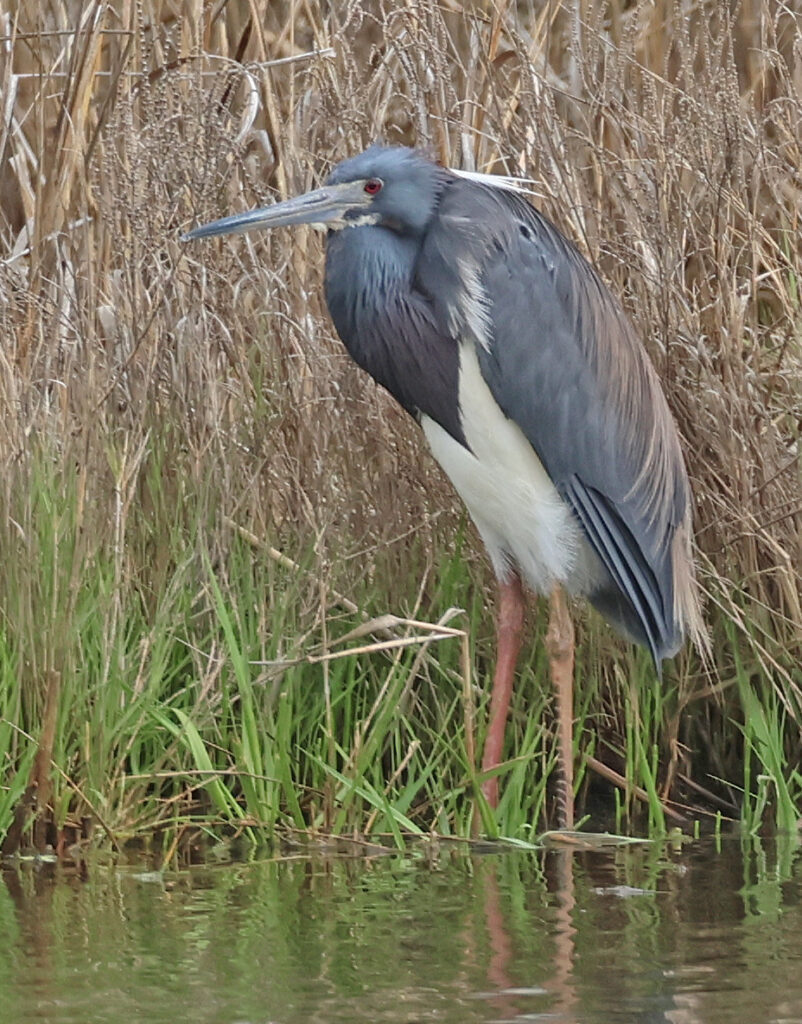
This Tricolored Heron is in striking breeding plumage and has two whitish breeding plumes atop the rear crown. They are fairly common in the marshes of southern Maryland and Virginia’s eastern shore. Photo by Linda Mack.
The skies cleared Sunday night, and we appreciated a beautiful Monday morning exploring the Nassawango Creek watershed in southern Maryland. A pair of Red-shouldered Hawks called vociferously as they circled over their breeding territory, and a Barred Owl answered my imitation of the “Who cooks for you?” call. Warblers were in evidence: we heard and saw more Prothonotaries, Parulas, and Prairies, watched an American Redstart building a nest, and had great views of the often skulky Worm-eating Warbler. We enjoyed hearing our first singing Wood Thrushes, watched a foraging Yellow-throated Vireo, and had great looks at a cooperative Yellow-breasted Chat.
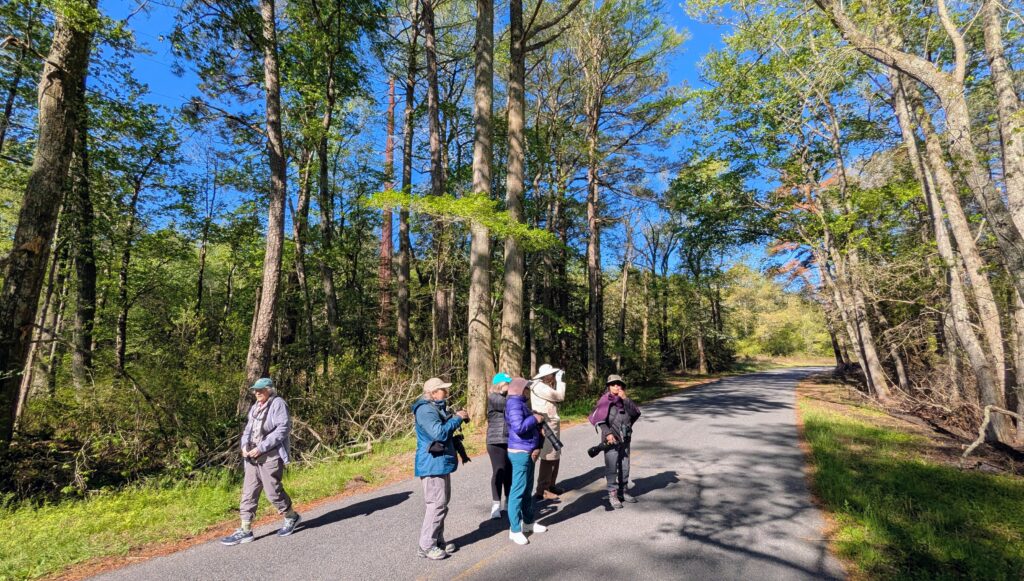
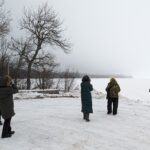
Forest birding among tall bald cypress and black gum trees at Nassawango Creek. Photo by Scott Barnes.
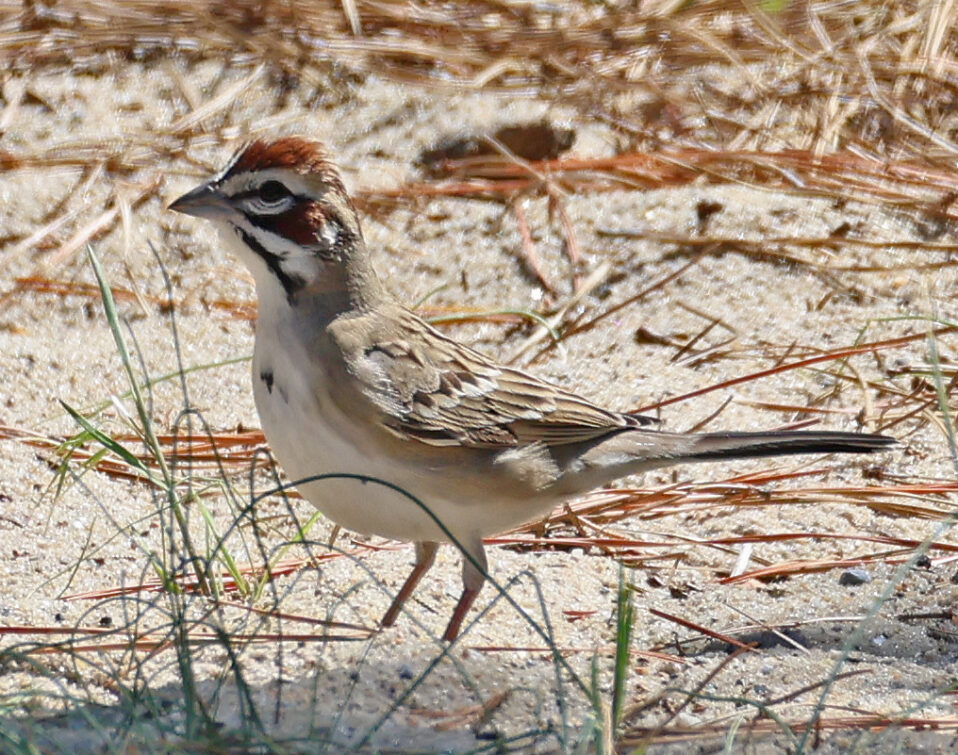
In the afternoon we made a short visit to Cape Henlopen State Park where we twitched a stakeout Lark Sparrow and spent a few minutes scanning the mouth of Delaware Bay where we added Red-throated Loon to the bird list. Our last stop was at the mouth of the Mispillion River, where the DuPont Nature Center’s deck offers a great view of the inlet, marshes, and jetties. We picked up two Caspian Terns for the trip, saw a flock of Ruddy Turnstones, and watched the antics of puffed-up male Boat-tailed Grackles before heading back to NJ.
Thanks to everyone who joined the trip and for their support of New Jersey Audubon Eco-Travel!
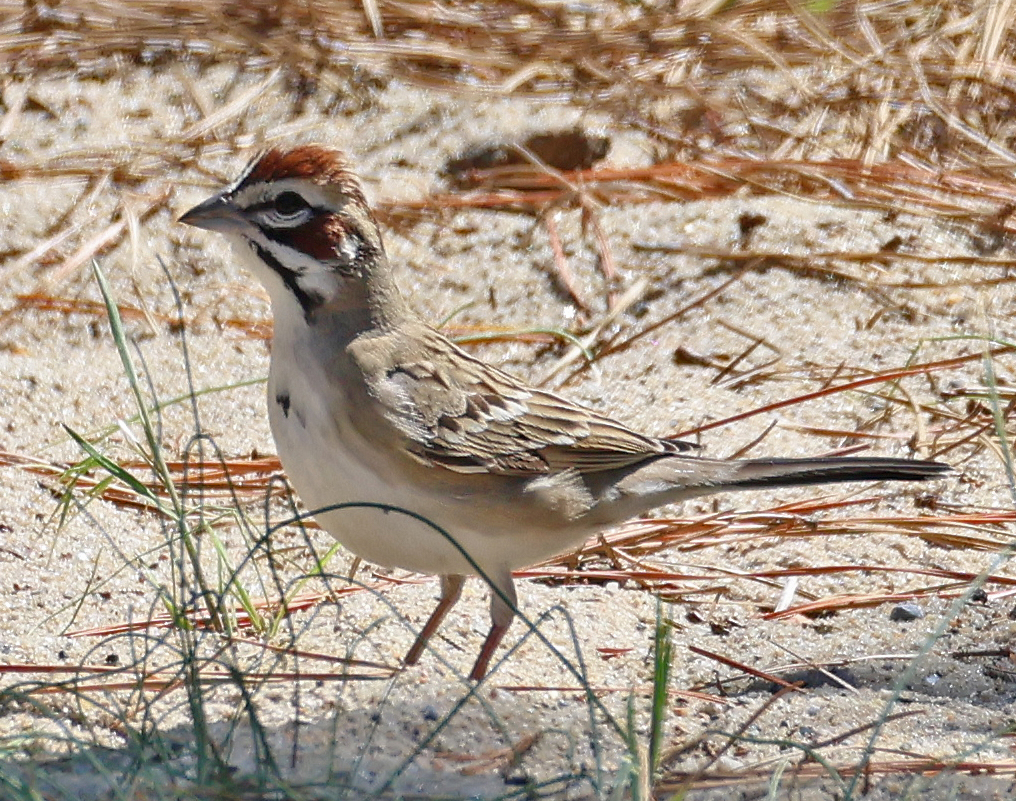
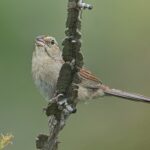
Lark Sparrow is a rare spring visitor to the Mid-Atlantic and we couldn’t resist chasing this attractive, harlequin-faced sparrow on our last day. Photo by Linda Mack.
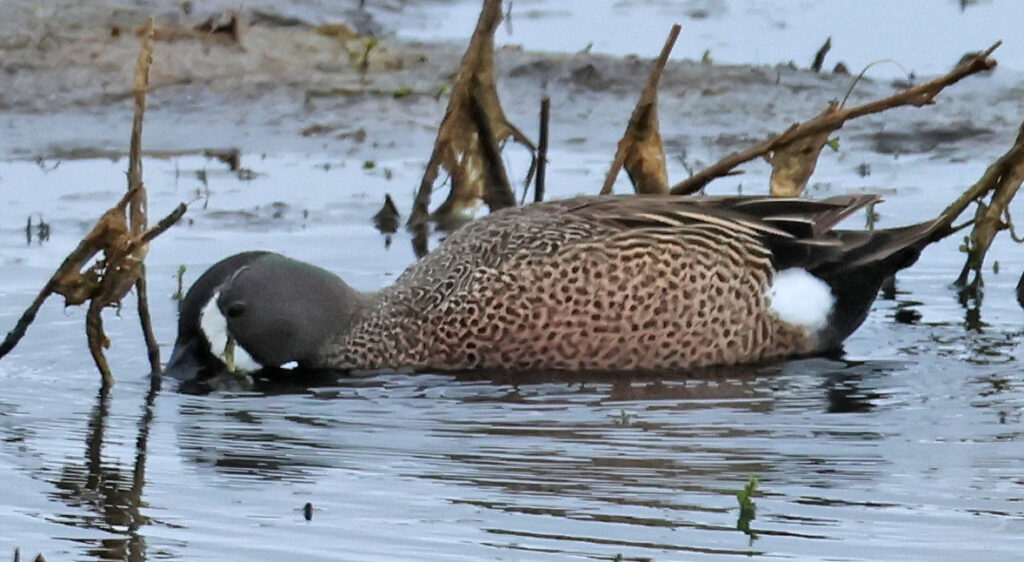
Blue-winged Teal drakes have beautiful slate-blue heads with polka dot flanks. Some winter as far south as Peru. Photo by Linda Mack.
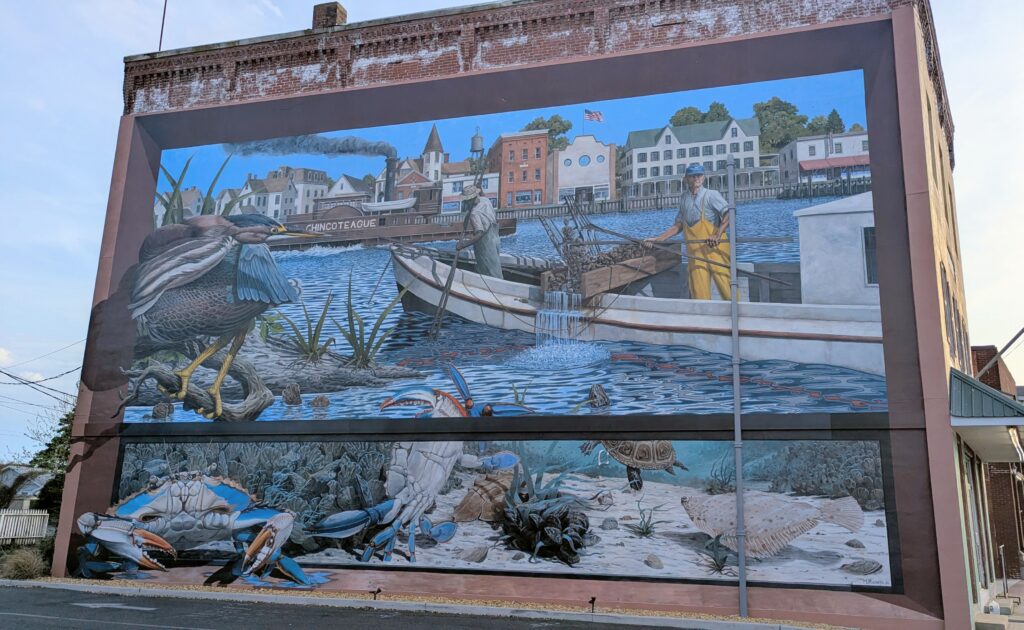
Chincoteague Mural