Week 2 Recap:
The second week of the Cape May Songbird Stopover Project brought a whirlwind of wings, color, and data as we had some of the busiest days of the season this week. With migration in full swing, the mist nets were alive with activity—and our dedicated team rose to the challenge.
In total, they safely banded and released over 700 individual birds during Week 2. This incredible number not only marks a significant increase in activity compared to Week 1 but also highlights the crucial role Cape May plays as a stopover site for migratory passerines. As Autumn quickly approaches, the diverse habitat of the South Cape May Meadows is serving as a place of refuge to all migrants, not just the feathered ones!
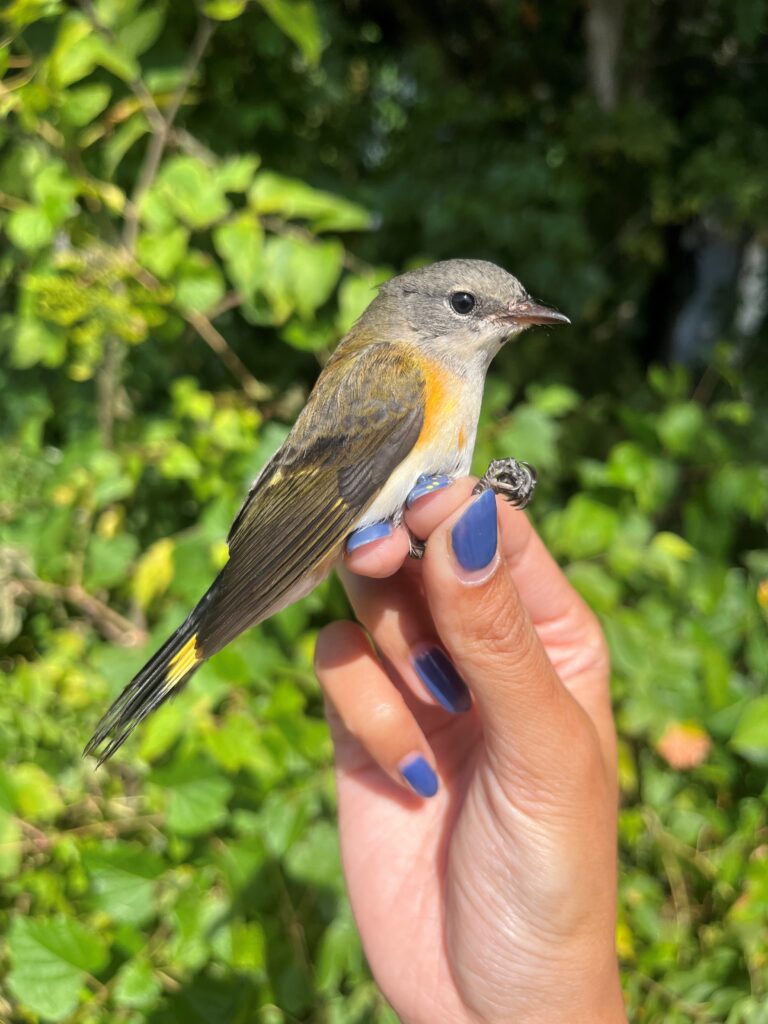
The biggest day of Week 2 fell on Thursday, August 28th, when a total of two hundred and fifty-two birds were intercepted at the banding station and processed by the banding team. Of the 200+ birds seen on August 28th, 106 of them were American Redstarts, making up a third of the week’s grand total for this species, which reached 297 individuals!
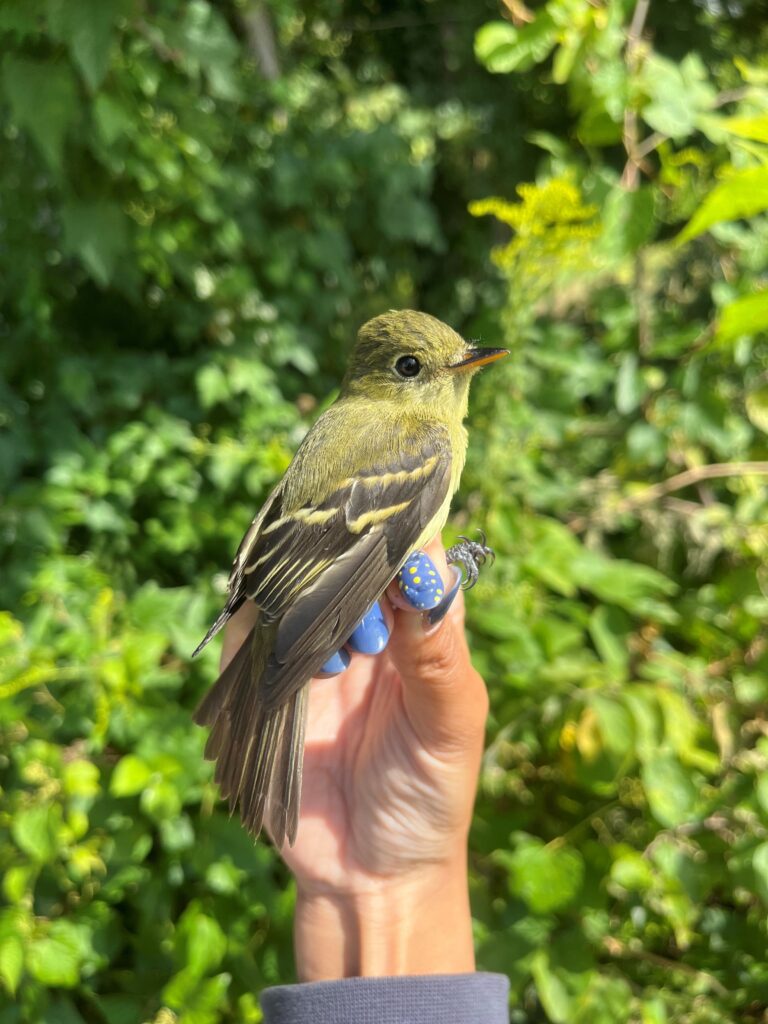
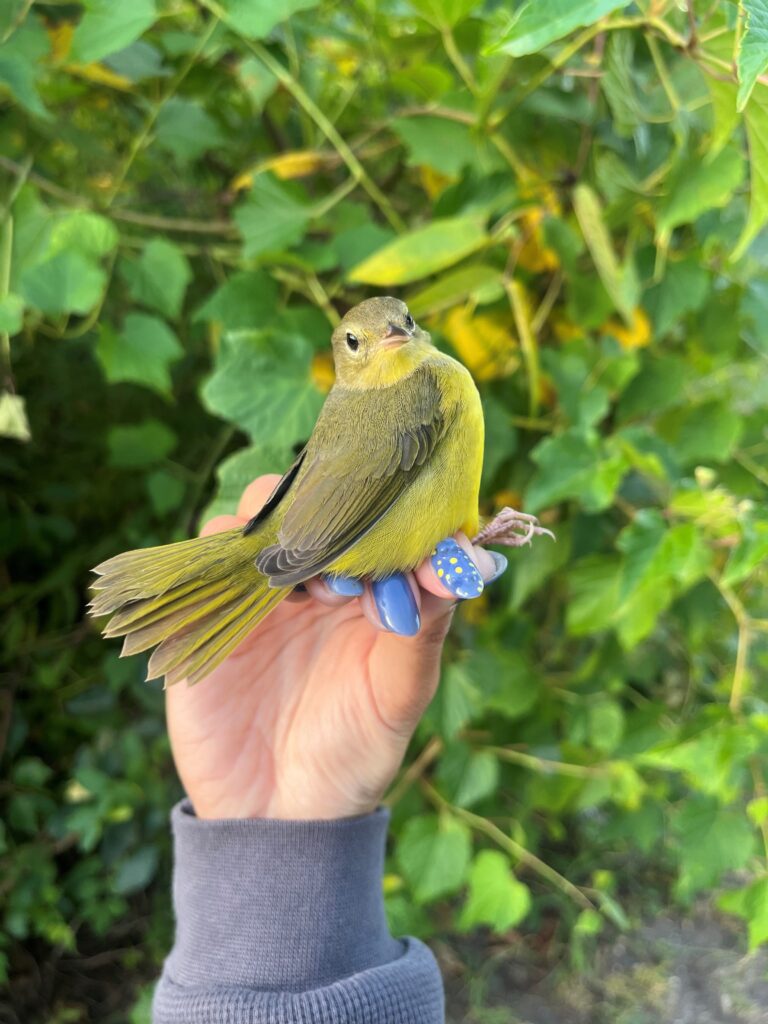
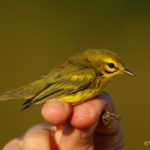
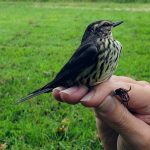
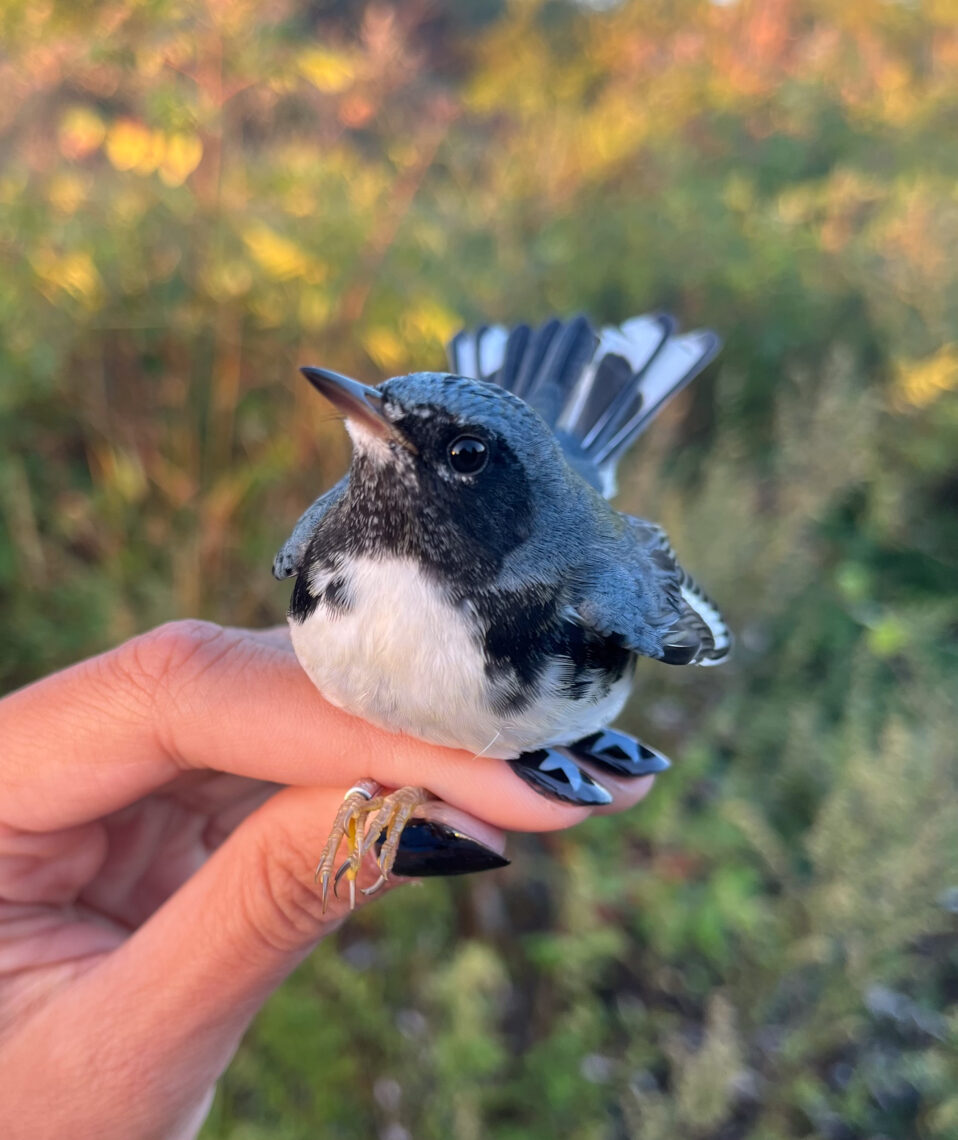
The team had a multitude of season firsts, including a few Mourning Warblers, Chestnut-sided Warblers, Hooded Warblers, and four Blue-winged Warblers! Additionally, the crew also had their first Least Flycatcher, Yellow-bellied Flycatcher, and Baltimore Oriole of the season this week. The first Oriole was then followed up by another twelve being banded on the following day, on August 29th!
The most interesting species observed in the nets and the anomaly of the season: a Sora! It was in the early hours of August 27th when the banding team just began opening up the nets fifteen minutes before sunrise. After opening the first few nets, the Sora was spooked from its hiding spot in the reeds and flew right into the bottom of net one. The team quickly (and excitedly) worked together to safely remove the Sora from the net, band it, and collect its measurements before admiring it and sending it back on its way.
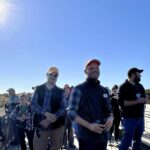
The excitement of week two didn’t end with the impressive number of migrating songbirds — the team also hosted many other visitors, including the entire seasonal staff from the Cape May Bird Observatory. Their staff orientation visit is an integral part of building a shared understanding of the significance of bird banding at this critical migratory stopover site. It’s through these connections — both avian and human — that we continue to support and celebrate the vital work of bird conservation in Cape May.
With migration ramping up, we’re expecting even more diversity and density in the coming weeks. Stay tuned for more updates from the field, behind-the-scenes looks at our banding station, and highlights of the amazing avian visitors using Cape May as their migratory pit stop.