



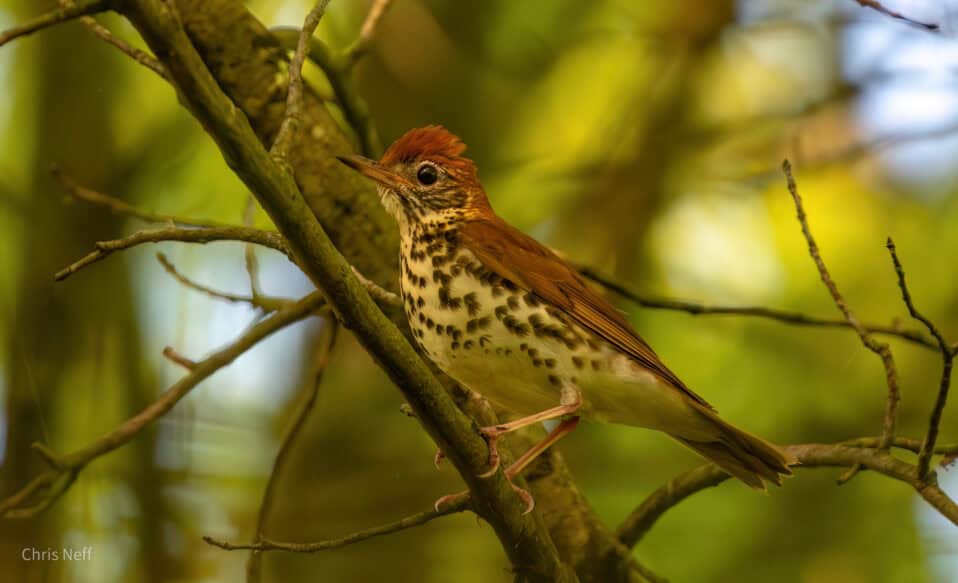
Wood thrushes are typically found in mature, closed canopy forests but will forage in young forest growth with their fledglings.
In the densely populated landscape of New Jersey, healthy forest ecosystems require thoughtful, science-backed management to support diverse wildlife. Many of the state’s woodlands are suffering from uniform age structures, dense invasive undergrowth, and a lack of structural diversity, which deprives bird species of the specific habitats they need to survive.
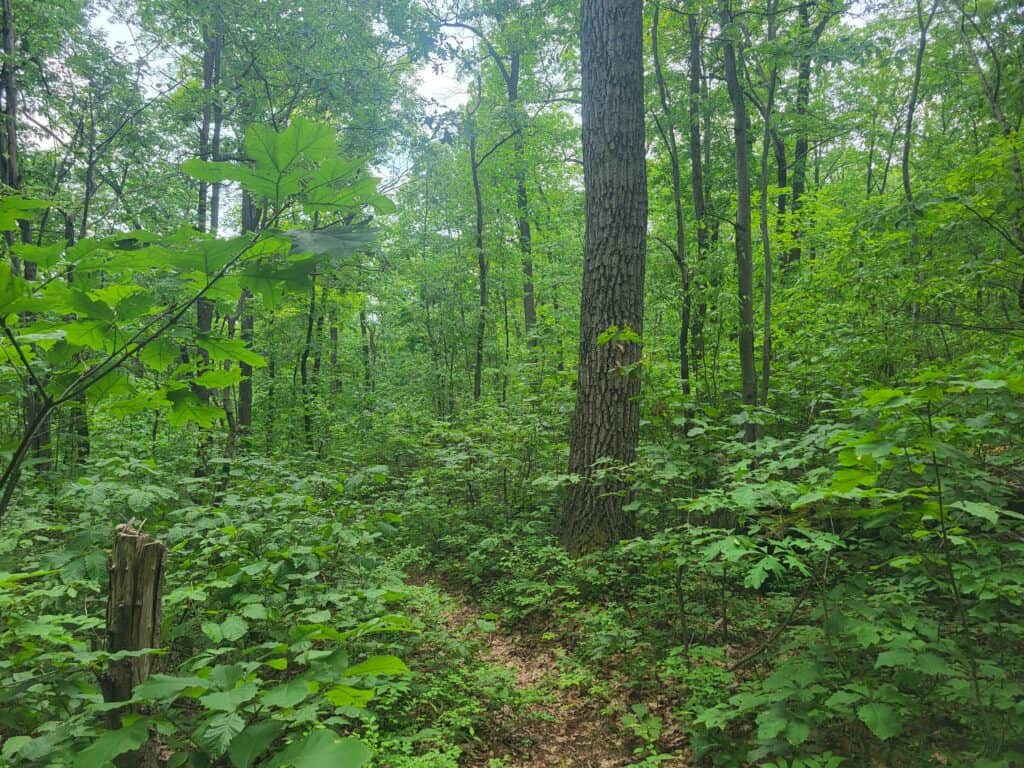
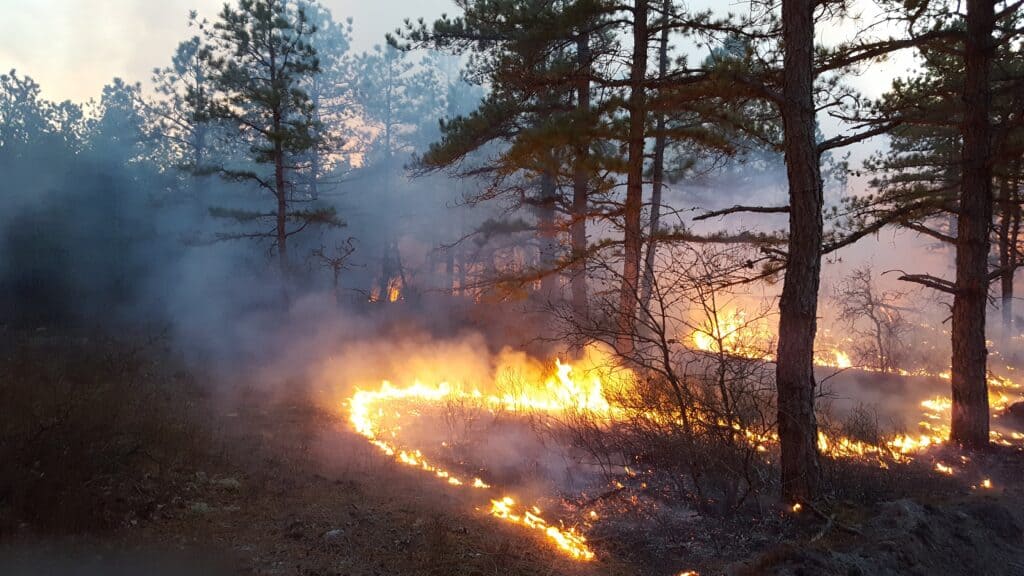
To address the many stressors and influences negatively impacting forests, New Jersey Audubon (NJA) actively manages thousands of acres of public and private forestlands to restore natural processes and function, enhance biodiversity, and create resilient habitats. Through its Stewardship Department, NJA foresters and staff work to implement targeted, active forest management practices throughout the state. Some of these practices include: selective thinning to improve growing conditions for desirable tree species, creation of canopy gaps to stimulate new growth and regeneration of light-dependent plants, prescribed burning to reduce heavy fuel loads that can lead to catastrophic wildfires, and management of invasive plant species to reduce competition impeding the growth of desirable native vegetation. These efforts have already shown the ability to create a mosaic of young forest patches and healthy mature stands, all of which contributes to a larger-scale, varied forest landscape. These variations are crucial for a wide variety of bird species, as they provide essential nesting opportunities, shelter from predation, and abundant food sources like native berries and insects.
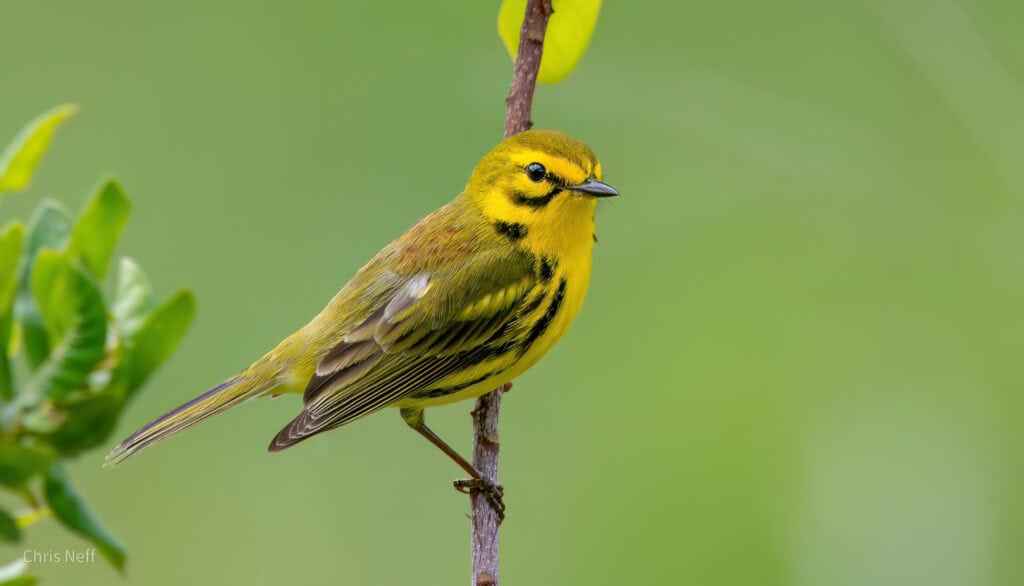
Much of this active management approach directly targets species facing significant population declines due to habitat loss. Early successional, young forest habitats created through activities managed by qualified foresters, have helped support declining songbirds like the Golden-winged Warbler, Prairie Warbler, and Eastern Towhee. Conversely, other management activities can facilitate the development of old-growth characteristics in mature, stagnated forests, benefiting the bird species dependent on them (such as wood thrushes).
By pairing habitat creation with regional goal setting, collaboration with other organizations and agencies, and ongoing monitoring, New Jersey Audubon ensures that every management action is effective and adaptive over time. Breeding bird surveys allow researchers to track how resident and migratory birds respond to restored areas. Vegetation surveys and forest inventories guide foresters and land managers with the necessary data to continue making informed decisions on when and where to conduct management activities. Moving forward, NJA aims to continue its work to restore and enhance forestland found on many of its sanctuaries, as well as assisting private and public landowners interested in doing the same. As restoration activities continue to be completed and bird response monitored, NJA will look to share its findings through public programs, professional development opportunities, and informal walks throughout the state.
By Ryan Hasko, Stewardship Project Director

