Fresh off last week’s Nor’easter and with the peak of Neotropical bird migration behind us, Monday brought a total of 65 birds caught, including four recaptures. With all 60 Northern Waterthrush transmitters deployed, the team shifted its focus to Veeries, a small forest thrush, tagging three to kick off the next phase of the project.
Tuesday was an exciting blur! Calm winds contrasted Gray Catbirds and Common Yellowthroats arriving in full force, while volunteers pitched in to help record an astounding 116 new birds, including seven first-of-season captures. The team also deployed two more transmitters on Veeries.
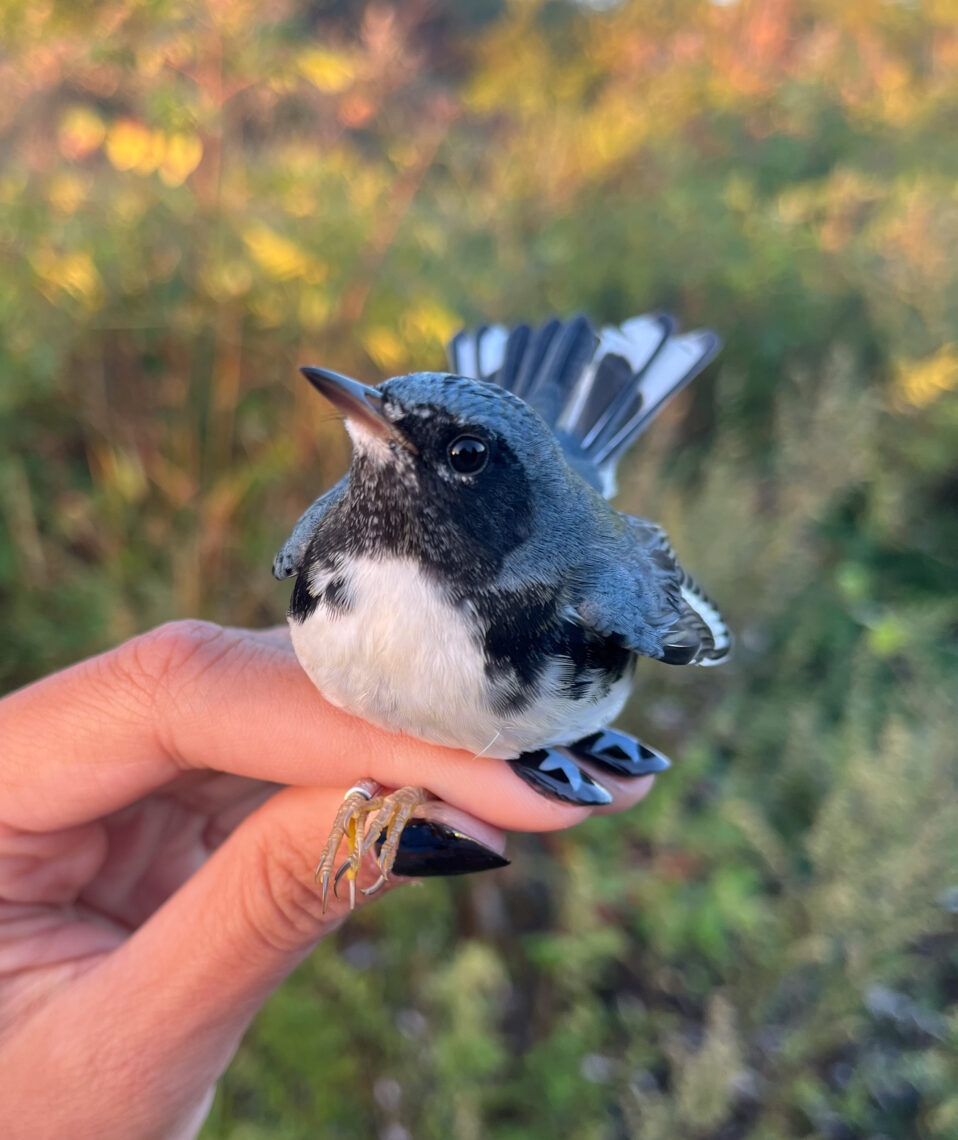
Wednesday was by far the busiest morning of the season, with 179 new birds, 11 recaptures, 15 warbler species, and 35 species recorded overall. Talk about setting the bar high! Among the day’s highlights were three Rose-breasted Grosbeaks and five Black-throated Blue Warblers, a mid-canopy species whose males are recognized by their striking denim-blue plumage. Even more exciting, two of these individuals belonged to the Appalachian subspecies, marking a first for the project! They were identified by the presence of black streaks on the mantle, a feature typically absent in northern birds.
Wednesday also marked the arrival of the first of many Yellow-rumped Warblers, a common but beloved species among the banders. Affectionately nicknamed “butterbutts” for their bright yellow rump patches, these warblers have the scientific name Setophaga coronata. Derived from Greek and Latin, the name translates roughly to “crowned moth-eater,” referencing both their insect-rich diet and distinctive, though rarely visible, golden crown. Their ability to digest the waxy coating found on the berries of northern bayberry and wax myrtle, two native New Jersey shrubs, is truly fascinating!
The week granted us several first-of-season’s:
- Monday – Swainson’s Thrush and American Goldfinch
- Tuesday – Brown Creeper, Yellow Palm Warbler, Gray-cheeked Thrush, Bicknell’s Thrush, Scarlet Tanager, Swamp Sparrow, White-throated Sparrow, and Ruby-crowned Kinglet
- Wednesday – Winter Wren, Rose-breasted Grosbeak, Blackpoll Warbler, Yellow-rumped (Myrtle) Warbler, and Northern Flicker (Yellow-shafted)
- Thursday – Wilson’s Warbler
- Saturday – Blackburnian Warbler and Lincoln’s Sparrow
Saturday brought 14 warbler species through the station, including 18 Blackpoll Warblers, all carrying impressive fat reserves. This marked a new single-day capture record for the species! Another exciting highlight was a Blackburnian Warbler, just the fourth recorded since the project began in 2018. A very unusual visitor, these incredible migrants undertake an impressive transoceanic journey, crossing the Gulf and flying nonstop over open water for up to three days! Other notable end-of-the-week captures include another Connecticut Warbler and Yellow-billed Cuckoo. To round out the week, not one, but three Lincoln’s Sparrows passed through the station, marking the first captures of the season. Tune in for more updates as the season continues!
Rose-breasted Grosbeak (female vs male underwing plumage) photo by Lena Usyk
Rose-breasted Grosbeak (female vs male underwing plumage) photo by Lena Usyk
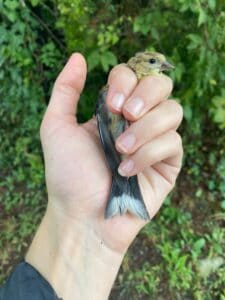
American Goldfinch photo by Lisa Viviano
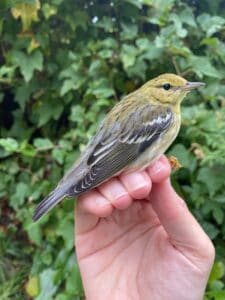
Blackpoll Warbler photo by Lisa Viviano
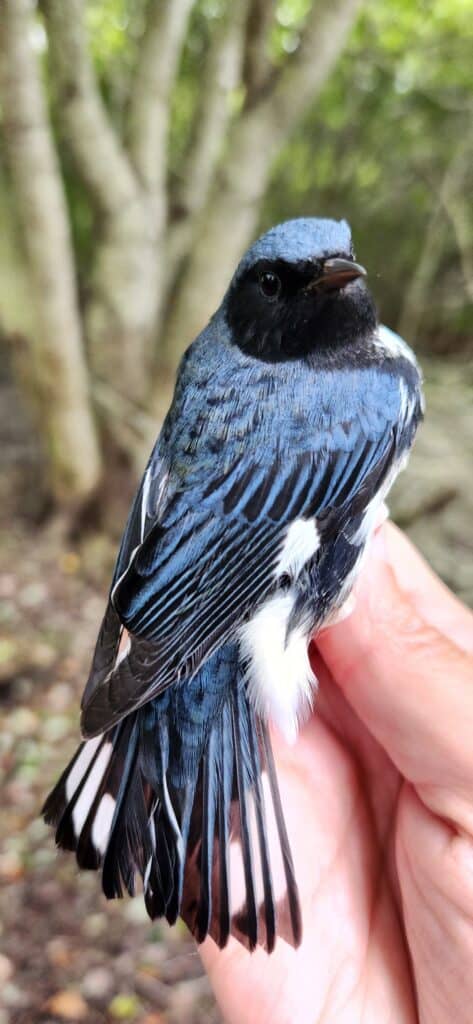
Black-throated Blue Warbler photo by Lena Usyk
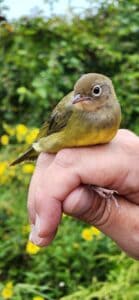
Connecticut Warbler photo by David La Puma
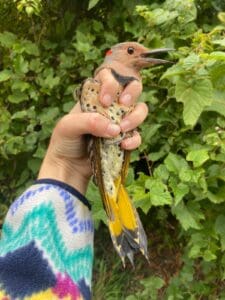
Northern Flicker (Yellow-shafted) photo by Lisa Viviano
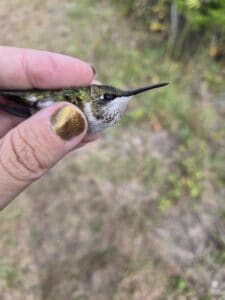
Ruby-throated Hummingbird photo by Vicki Morgan
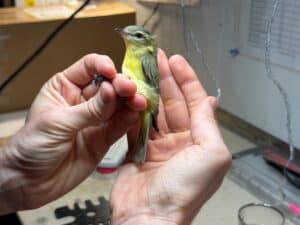
Scarlet Tanager photo by Scott Whittle
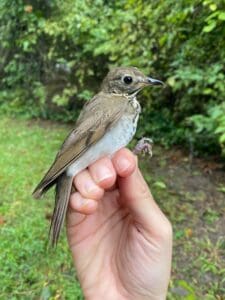
Veery photo by Lisa Viviano
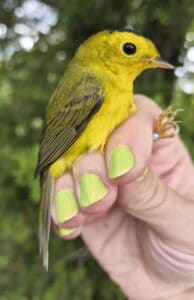
Wilson’s Warbler photo by Vicki Morgan
All bird capture, handling, and banding are authorized under appropriate USGS state and federal permits.