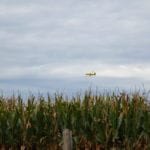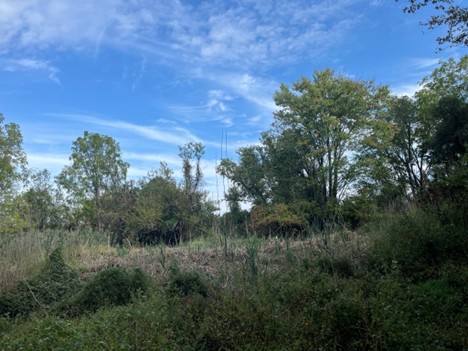
Spring: Mechanical treatment of Phragmites early in the growing season will allow enough time for green up and fall foliar herbicide application.
After the big snowfall in southern New Jersey last week, planning for spring plantings and summer invasive plant treatment may be the last thing on your mind, but now is the ideal time to start! Consider reaching out to conservation professionals to discuss your property’s habitat potential or order seed mixes for your spring meadow restoration project. If you’re looking for inspiration, this is also the season for conferences, and you can learn about a broad range of topics including agricultural practices and wildlife management!
The following is a collection of seasonal conservation and planning activities that New Jersey Audubon’s (NJA) Stewardship Department and our partners work through in a year. We hope it will give you an idea of what to plan for your property!
Winter: Planning, Learning and Dormant Season Activities
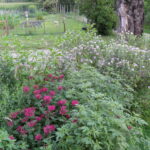
Our team is catching up on office work, plan writing and trainings following a busy fall season, and resetting for the next cycle of field work which will begin once the weather warms up and the growing season starts. The Ag & Wetlands crew did a couple of winter field days to conduct restoration work in Bog Turtle habitat while the turtles hibernate, and also finished up some dormant season plantings of pollinator fields with our partners at the US Fish & Wildlife Service (USFWS). Our NJA forestry team is writing Forest Stewardship plans which will provide guidance to landowners on how to better manage natural resources on forested lands and give guidelines for enhancing habitat quality. Towards the end of winter, we plan to conduct some habitat surveys with our partners at NJDEP. If you’re interested in a spring pollinator or grassland planting, look at seed mixes available through native nurseries that source local seed, or talk to a habitat professional to help you come up with a seed mix for your site. Now is a great time to reach out to these professionals because our schedules are more flexible and we’re itching to get back into the field! We would love to chat about property goals and financial assistance options that will help to accomplish your goals through our partner agencies!
Spring: Habitat Surveys, Contract Signing and Invasive Control
The weather gets nicer, the mud gets deeper, and our drive to get work done is directly correlated with longer days and no longer needing 3 layers of clothing. We’ll continue with habitat surveys and assess site prep for any summer work at our project sites. Now is also the time to chemically treat certain invasives with foliar applications, because the young green shoots respond well to the herbicide. Applying herbicide requires an applicator or operator license, available through NJDEP, unless applying a premade mix that can be purchased at your local hardware store. Make sure to strictly adhere to printed chemical labels. Our partners at the Natural Resources Conservation Service (NRCS) are starting to obligate those 2024 EQIP and RCPP applications that were selected for funding! This means that the selected landowners will receive a contract to sign, detailing the restoration work to be done. If you think you would like to apply for federal cost-share programs in the coming years, now is a great time to reach out to NJA or your county NRCS field office to start discussing goals and potential applications. This is a completely voluntary process. Applying for these programs will provide you with resources to implement conservation practices to help enhance agriculture, soil quality and water health, that have added benefits for wildlife- so even if you think you don’t need help, it never hurts to see what practices are available to address concerns you may have about your property! New Jersey Audubon has staff that are well versed in NRCS conservation practices and can get you where you need to go if you want help taking that first step!
Summer: Education Field Days, More Invasive Control and Planning for the Fall
Longer days and high humidity are here to stay, as are a lot of invasive plants if not treated! We spent a decent chuck of summer 2024 conducting mechanical brush treatment at our Phragmites sites (Phragmites is an invasive grass found in wetlands) by cutting back the tall grasses. Most invasives respond to a mechanical treatment followed by a chemical treatment once they resprout. This is also a great time to attend field walks and outreach events, so you can see native and invasive vegetation at full maturity. We also spend time planning our fall field days and any dormant season plantings we want to do since most nurseries have full stock of their native seeds by this time. Seeds can be purchased and cold stored for planting later. Remember to hold off on any ground preparations or mowing during this time to preserve habitat for grassland birds. Grassland birds nest roughly from April 1- August 1. Mowing and seedbed preparation can occur in the fall for dormant plantings if needed.
Fall: Preparing for Seeding, Tree Plantings and NRCS Applications
Fall tends to be our busiest time because restoration preparations for the next year begins (it’s okay if you feel behind, at this point in the year we usually do too!). We are treating invasive plants and trees with foliar or broad leaf herbicide application because plants start to draw resources back into their root structures, resulting in successful plant kill. Ground preparations can occur during the later fall months now that nesting birds are less at risk and hibernating amphibians and reptiles are starting to go dormant. Fall can be tricky time for restoration work due to unpredictable weather and late frosts, but it’s also our principal time for tree planting projects. Late fall and early winter are an optimal time to treat invasive shrubs, trees and vines with herbicide. Our team is also working on end of year grant reporting, and we busily submitting information to our funders about our efforts over the previous year. Our partners at NRCS typically have their major programmatic application deadlines during this period, so if you are thinking about starting a project in the spring, now is the time to submit applications and eligibility documents to your local field office for consideration for 2026 funding cycles! It’s also a great time to do equipment maintenance or winterize your machines.
Thanks for a great 2024 in the field- we are looking forward to helping you accomplish your conservation goals in 2025!
Kati DePaola, NJA Stewardship Specialist