Caught in Monhegan’s Trap
Monhegan Island, Maine
September 20-25, 2026
Monhegan Island is a small bump in the ocean (1.7 miles long and 0.7 miles wide), twelve miles off the mid-coast of Maine, that has played a larger role in history than most people would ever imagine. Monhegan was known to European explorers, even before the Weymouth Expedition in 1605, the arrival of Captain John Smith in 1614, and its use as a significant fishing outpost, with its protected harbor provided by the smaller and fortuitously situated Manana Island. In 1839, it officially became the Monhegan Plantation and limited settlement and development soon followed. In the rush to take advantage of its natural beauty, including the highest cliffs on the Atlantic Seaboard at 160’, freshwater pond and nine-acre meadow, and extensive spruce/fir forest, Monhegan soon succumbed to human pressure and overuse, with much of its timber removed by the early 20th century. It was the foresight and personal appreciation of Thomas Edison’s son, Theodore, that led to the eventual purchase of 23 parcels and the formation of the Monhegan Associates in 1954 to protect the lands forever. Today, two-thirds of the island is in a natural state, with miles of trails providing access. The combination of regrowth, plantings, and rugged coastline, along with the small artist-colony and lobstering town and the second highest positioned lighthouse in Maine, provide the charm and ambiance that continue to enchant and inspire visitors.
Of course, for us, it was the allure of Monhegan’s rich ornithological history, with records dating back over 125 years, extensive checklist, and continued enjoyment and postings by today’s birders that brought us to the island in the middle of September, to partake of fall migration at a true migrant trap. Along with the chance to view a diverse set of species, often at close range, Monhegan has a long list of rarities and vagrants recorded throughout the years.
Leaving our vehicles on the mainland, we embarked on our tour from the Monhegan Boat Landing in Port Clyde, boarding Elizabeth Ann at 3 PM for the approximately one hour crossing to Monhegan, passing through several miles of near-shore islands before the open water expanse that led to Monhegan. Light rain and intermittent fog were our companions on the trip, but did allow for limited observations. Even before we left the dock, a Bald Eagle was spotted from the picturesque harbor and we noted some Canada Geese and a resident Rock Pigeon, a rare sighting on Monhegan. Several Common Loons and Black Guillemots greeted us as we left the harbor, and ever-present Herring Gulls, Double-crested Cormorants, and Common Eiders were in view for the first portion of the trip. A gathering of seals was hauled up on one of the small rocky islands and bobbing in the surrounding waters and a Harbor Porpoise was seen offshore. A smattering of gulls populated the open ocean, highlighted by three distant Northern Gannets, two Wilson’s Storm-Petrels and a Pomarine Jaeger, before Monhegan itself appeared before us.
After arriving at the small dock, centrally located on the west side of the island, we checked into our nearby accommodations, and then had a brief period of time to set off on our first trek—birding stretches of the main roads in the middle section of the island to Fish Beach. Despite the many wooded acres on Monhegan, mainly situated in the eastern and northern portions of the island, the best birding often occurs right along the town’s gravel roads and nearby trails, with clumps of lilacs and apple trees often a favorite location. A pleasant stroll along Main St., minus the rain, produced a number of raptors, including all three falcon species. The scattered spruces contained a Cape May Warbler, Northern Yellow Warblers and a Wilson’s Warbler, while the lower flowerbeds attracted a Ruby-throated Hummingbird and Common Yellowthroat. We also had a nice view of a lingering Green-winged Teal that was enjoying the harbor off Swim Beach. We finished the day with an introductory dinner at the Island Inn.
Our first full day (Day Two) on the island was mostly sunny and beautiful (the temperate range for the entire time on the island only varied from 52-61 degrees), with an offshore system keeping the prevailing winds from the northeast over the duration of our stay. The morning began with the pre-breakfast ritual trip to the Ice Pond area—a serene freshwater pond in the middle of the island that attracts wayward waterfowl, shorebirds, and wading birds—to see what may have dropped in. The persistent drought conditions on the island meant it was more of an “Ice Puddle” this year, but still enough to attract various birds. Among the resident Mallards was a colorful male Wood Duck and the continuing Green-winged Teal that “migrated” from the harbor. A pair of Purple Finches were coming to bird feeders by the school and a flyover Great Blue Heron tried to evade detection. There was definitely some passerine movement happening, most obvious by the loud Northern Flickers that were evading several Sharp-shinned Hawks. A stroll up Blackhead Rd. produced many Ring-necked Pheasants coming to feed in a resident’s yard—a sign of the stable population scattered across the island that we would encounter throughout our time there.
After breakfast, we checked out Tribler Rd. and the Community Garden on our way to the pump house, before heading south and working our way to the church. Migrants were very much in evidence as a mini-fallout brought a diverse wave of warblers (14 species for the day) and other songbirds. Most noticeable were a group around Wharf Hill that included several American Redstarts, Cape May Warblers, Northern Yellow Warblers, Blackpoll Warblers, Black-throated Green Warbler, Northern Parula and a Least Flycatcher. The Community Garden was a highlight, with Lincoln’s Sparrow, Baltimore Oriole, Yellow-breasted Chat, Orange-crowned Warbler and Dickcissel all making an appearance. Our daily break for lunch provided an opportunity to experience the famed pizza at The Novelty, clam chowder at The Barnacle, or a selection from the the Mooring Chain, Trailing Yew, Fish House or general store.
We headed to the southern end of the island after lunch, with stops at the swale along Ocean Ave., the ocean overlook by the Wyeth House and of course, Lobster Cove and Lobster Point. In addition to the wonderful views, we admired a Clay-colored Sparrow mixing with Chipping Sparrows across from the Trailing Yew, Eastern Wood-Pewees, Alder Flycatcher, Yellow-bellied Sapsuckers and a Rose-breasted Grosbeak along the way. Raptors were often seen overhead, including multiples of all three falcons (daily high of 4 American Kestrels) and 2 Ospreys. The day was capped off by two Common Nighthawks patrolling the island at dusk.
Day 3 brought more sunshine and northeasterly winds. Our early morning jaunt passed the Ice Pond down Mucky Lane and provided an unobstructed vista to the west, past Nigh Duck and Outer Ducks to the mainland beyond—islets hosting many Herring and Great Black-backed Gulls and Double-crested Cormorants. We returned via a trail following the edge of the pond and Blackhead Rd. It was another morning of movement, with new birds evident, including Eastern Phoebes, Red-eyed Vireos and Ruby-crowned Kinglets. Flocks of Cedar Waxwings winged their way overhead, circling the island, and one Bobolink “binked” its way past. We spent the majority of late morning birding Wharf Hill (once again hosting warblers), the Tribler Rd./pump house area including the cemetery and the Alder Trail to Gull Cove, returning over Horn’s Hill. The mix of songbirds included a Swainson’s Thrush, singing Carolina Wrens, multiple Gray Catbirds, Brown Thrasher, one Swamp Sparrow with the Song Sparrows at the Community Garden, and a mix of warblers (once again 14 species for the day), such as Black-and-whites, Nashville, Prairie, Common Yellowthroats, Bay-breasteds and an increase in Yellow-rumps.
After lunch, we revisited Wharf Hill and took Main St. to Mooring Chain Rd., Ocean Dr. and Court St., then trekked eastward on the Underhill Trail to Burnt Head and a clear view across the ocean. Two Brown Creepers and a Yellow-bellied Flycatcher were a surprise at the southern end, while Yellow-bellied Sapsuckers seemed especially obvious. Flocks of Common Eiders were riding the waves below the headland and a pair of phalaropes teased us by turning around before coming close enough to identify to species.
The sun greeted us once again on Day 4, while the winds increased in intensity. We changed our morning tactics and climbed Lighthouse Hill past the Monhegan Museum to scan the Ballfield, before returning to the Ice Pond and the Schoolhouse Trail. Flyover Common Loons and an overdue Belted Kingfisher provided a bit of excitement, as did a hiding Rose-breasted Grosbeak. Post-breakfast, we explored the productive Community Garden and Wharf Hill areas before traipsing to Lobster Cove and on to Christmas Cove. Although the continuing beautiful conditions prompted less migration, there was still lots to see and experience on this magical island. Raptor-wise, a juvenile Northern Harrier showed off its cinnamon undersides, a rare Broad-winged Hawk soared overhead and at least four Merlins kept the songbirds alert with their incessant patrols. Surprisingly, the only European Starling of the trip was a showoff in the garden, with the continuing Dickcissel perched nearby. Two Savannah Sparrows at Lobster Cove were also a surprise.
We shifted gears after lunch, visiting the spruce/fir forests of the northern portion of the island. Our path took us out Black Head Trail to Fern Glen Trail and Station Hill Trail, then looped across Maple Trail to the magical ambience of Cathedral Woods. A quick stop at the Ice Pond as we passed produced a beautiful Rusty Blackbird feeding close by on the mudflat. Once into the woods, we were beckoned by the trumpeting call of Red-breasted Nuthatches. A hoped-for Swainson’s Thrush and out of place Magnolia and Black-and-white Warblers kept us searching the dense habitat. We visited the unique area of Long Swamp and followed the meandering Cathedral Woods Trail, discovering several houses of the elusive woodland fairies.
The weather was unchanged on Day 5, with sunny conditions persisting. We encountered the usual suspects before breakfast, including more Cedar Waxwing flocks and Northern Flickers winging by, a Purple Finch by the school and the continuing Green-winged Teal and a few more Yellow-rumped Warblers around the Ice Pond. After breakfast, we successfully chased a Black-bellied Plover posing at Swim Beach and enjoyed a Spotted Sandpiper on the nearby rocks. A stroll past the Community Garden to the pump house turned up our first White-crowned Sparrow among the Song Sparrows, a newly arrived Eastern Kingbird and a subtly beautiful Scarlet Tanager. Two Common Ravens were active towards Manana and our only Cooper’s Hawk of the tour (an uncommon bird on Monhegan) made a brief stop above the cemetery. Afterwards, we finally made it to the cul de sac on Wharton Ave. and views of the harbor rocks. A record-early Harlequin Duck near Manana was a real treat, as was the adult Lesser Black-backed Gull perched near the waterline.
Longing to experience more of the spruce/fir forest, we meandered the dense Red Ribbon trail after our midday lunch break, continued to the incredible 160’ high vistas at White Head and returned via the White Head Trail and down Lighthouse Hill. Red-breasted Nuthatches once again announced their presence, joined by a Golden-crowned Kinglet. Upon reaching the headland, the trees and shrubs parted to reveal stunning ocean views—all the way to Matinicus Rock (18 miles away) and beyond. Soaking in the natural beauty, we also took time to appreciate the cormorants and gulls roosting on the rocks below, including 4 Great Cormorants, and Common Eider drifting by. Hoped-for American Pipits provided great views at the Ballfield. We finished the day with a delicious dinner at the Monhegan House, reviewing the birds and places we’d seen and enjoying the camaraderie of fellow birders.
Despite an approaching storm, our final morning on the island enjoyed pleasant conditions, with increasing winds from the northeast. We strolled along Sterling Cove Rd. and soaked in the morning sun at the end of Mucky Lane, overlooking Nigh Duck and the waters all the way to the mainland. Three passing White-winged Scoters were a surprise, while a Bald Eagle kept watch over the Outer Ducks. The passing of fall was punctuated by the growing number of Yellow-rumped Warblers, joined by a lingering Wilson’s Warbler. Full of lobster scrambled eggs and fruity granola, our after-breakfast jaunt took us past the Community Garden and then onwards to the Wyeth overlook for some final seawatching and a check for songbirds on the way. Brown Thrasher, 2 White-throated Sparrows, Dickcissel and 5 surprise Canada Geese, among others, were our reward. Before we knew it, it was time to depart the island for Port Clyde, receiving a traditional sendoff, including a gathering of islanders and dock jumpers. Our ride back yielded seals, flocks of southward heading Double-crested Cormorants and multiple Northern Gannets, not to mention Bald Eagles, Laughing Gulls, Ring-billed Gulls, Black Guillemots and Common Loons. We were welcomed to the harbor at Port Clyde by our only Surf Scoters of the trip. We all-too-soon arrived at the Monhegan Boat Landing dock and the conclusion of the tour.
All in all, it was a wonderful trip, full of companionship, good food, beautiful vistas and natural settings, and birds. We managed 104 species for the trip, which included 9 waterfowl species, 9 raptors, 5 gulls, 6 flycatchers, 18 warblers, 8 sparrows, and much more!!
Brett Ewald
Tour Leader
NJA Eco-Travel
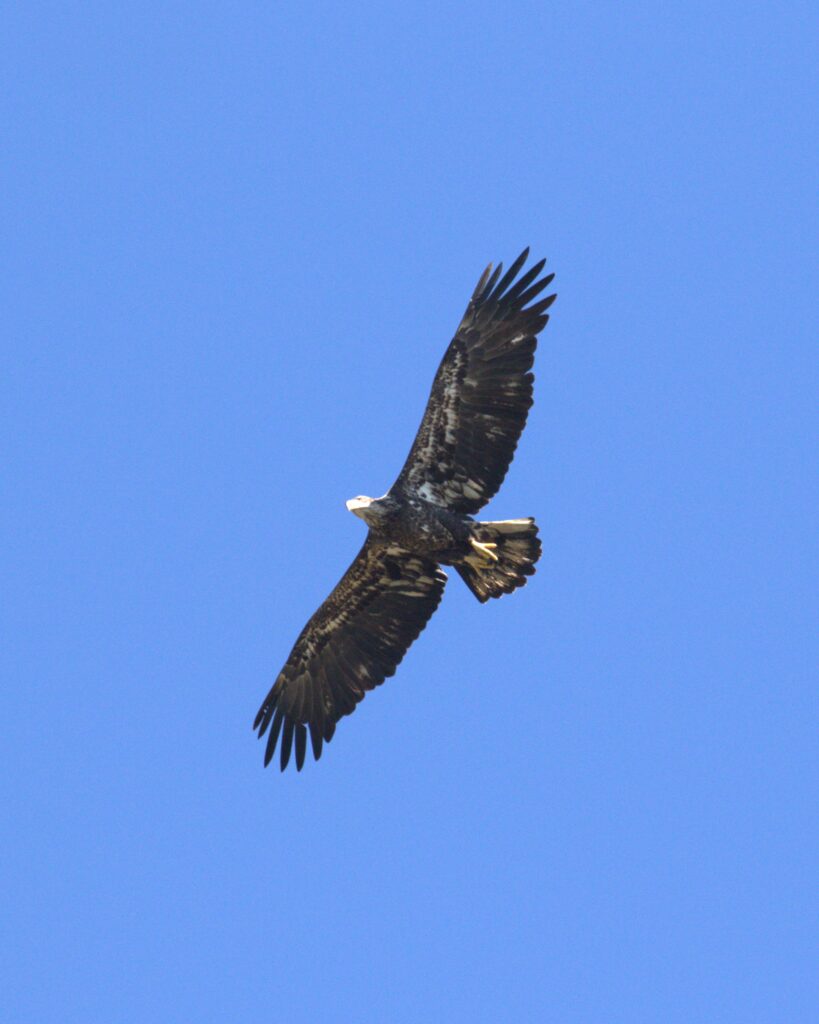
Bald Eagle photo by Brett Ewald
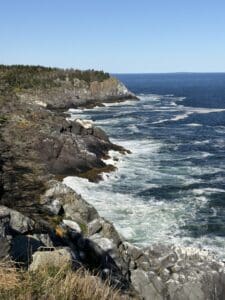
Black Head from White Head photo by Brett Ewald
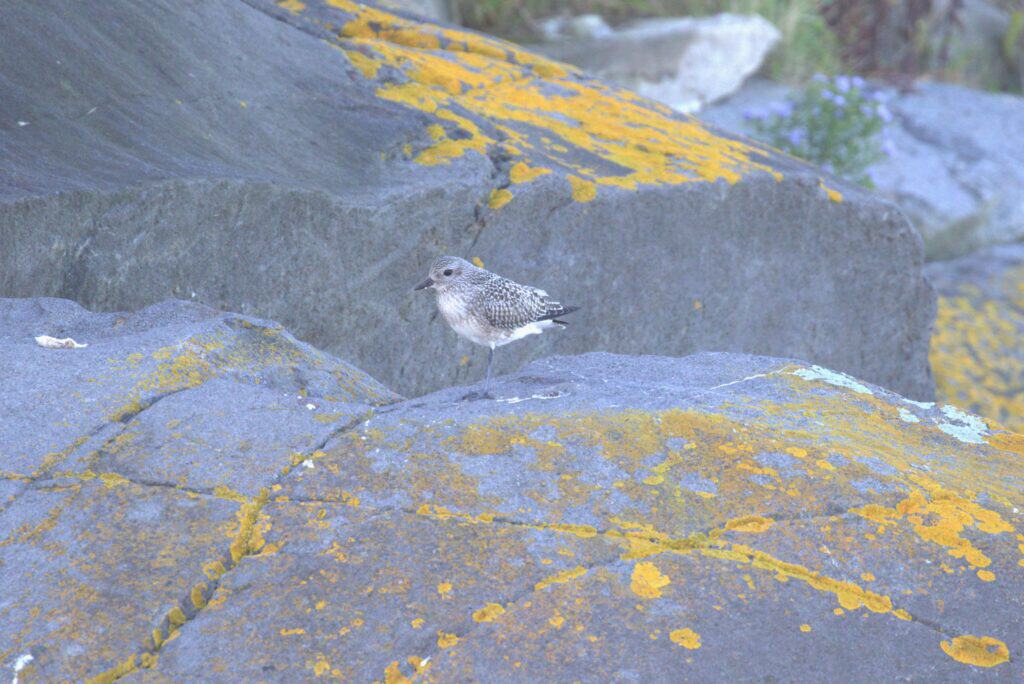
Black-bellied Plover Swim Beach photo by Brett Ewald
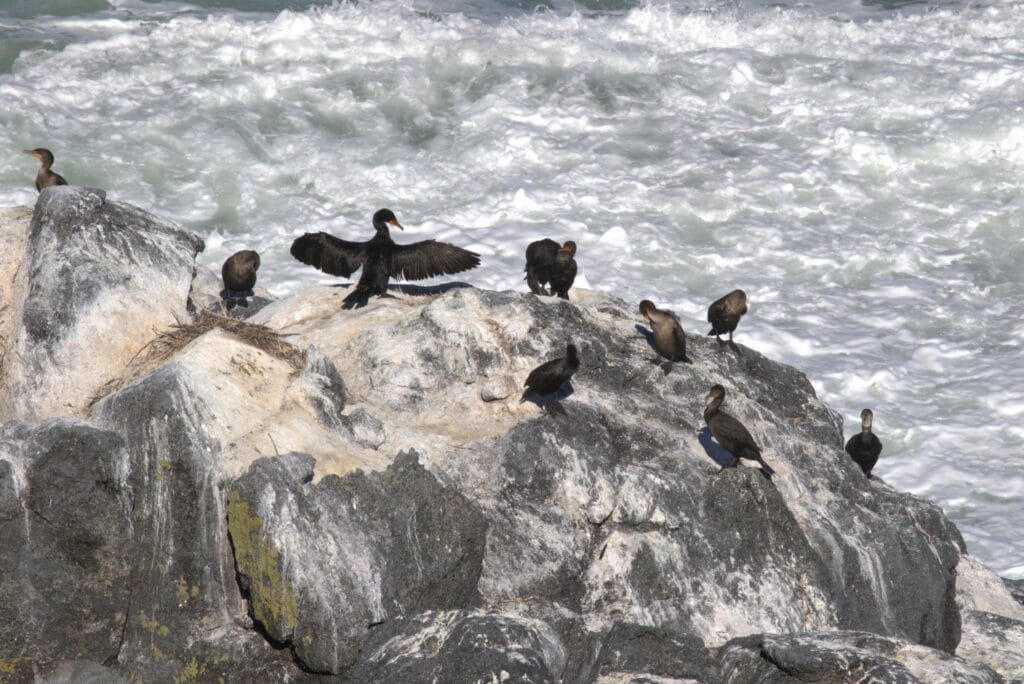
Double-crested and Great Cormorants White Head photo by Brett Ewald
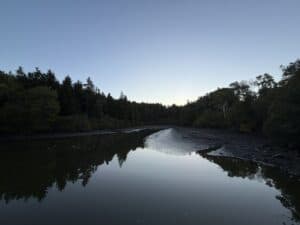
Early Morning Ice Pond photo by Brett Ewald
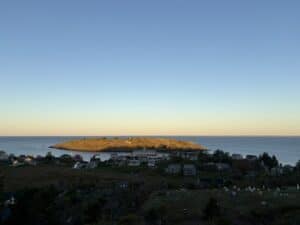
Early Morning Manana from Lighthouse Hill photo by Brett Ewald
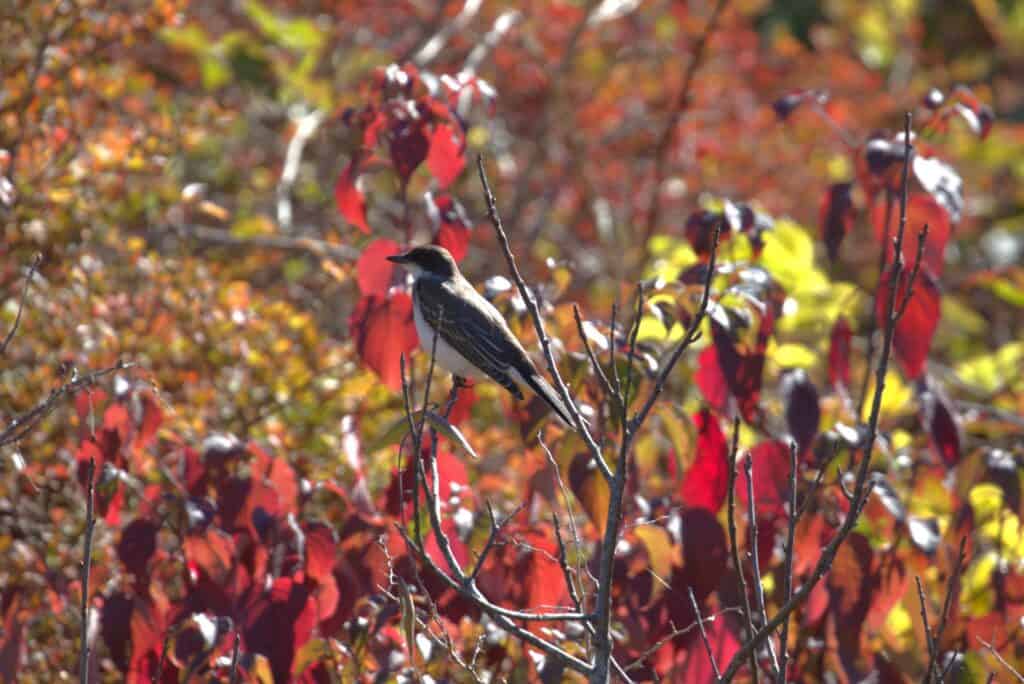
Eastern Kingbird photo by Brett Ewald
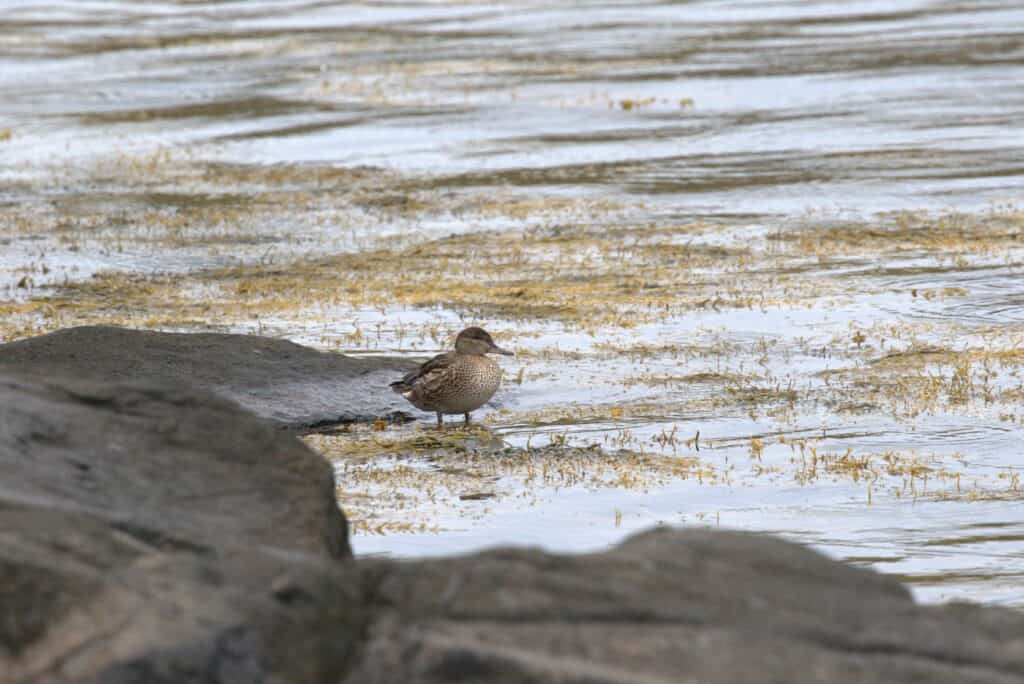
Green-winged Teal Swim Beach photo by Brett Ewald
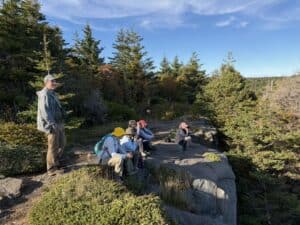
Group at Burnt Head photo by Brett Ewald
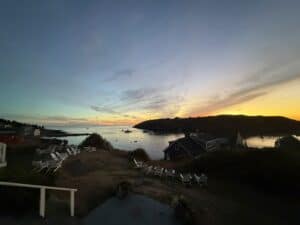
Harbor Sunset photo by Brett Ewald
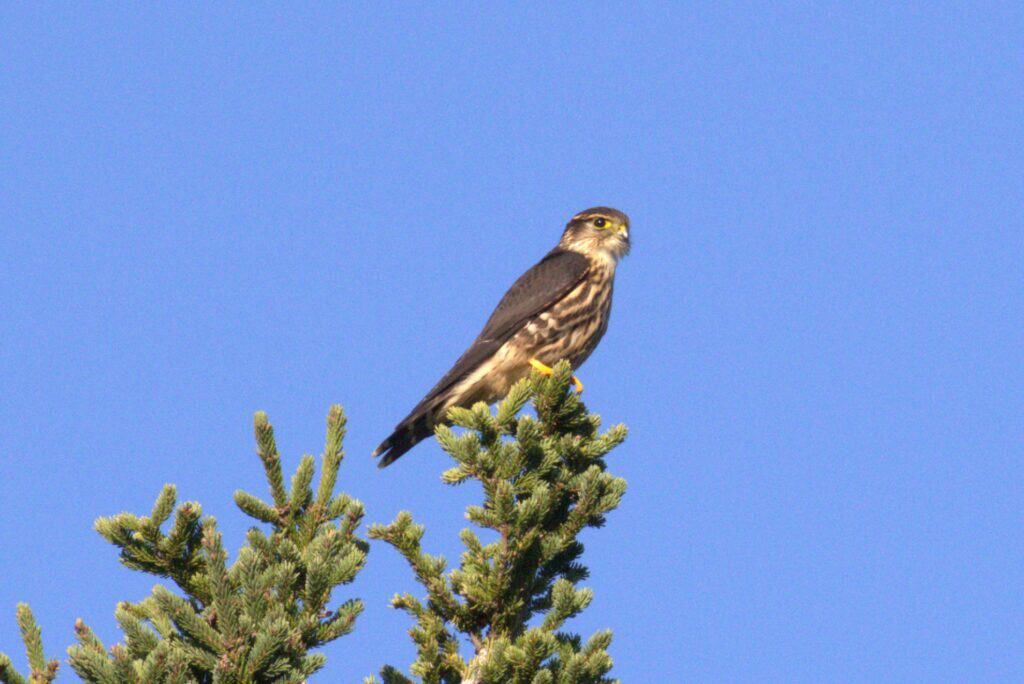
Merlin photo by Brett Ewald
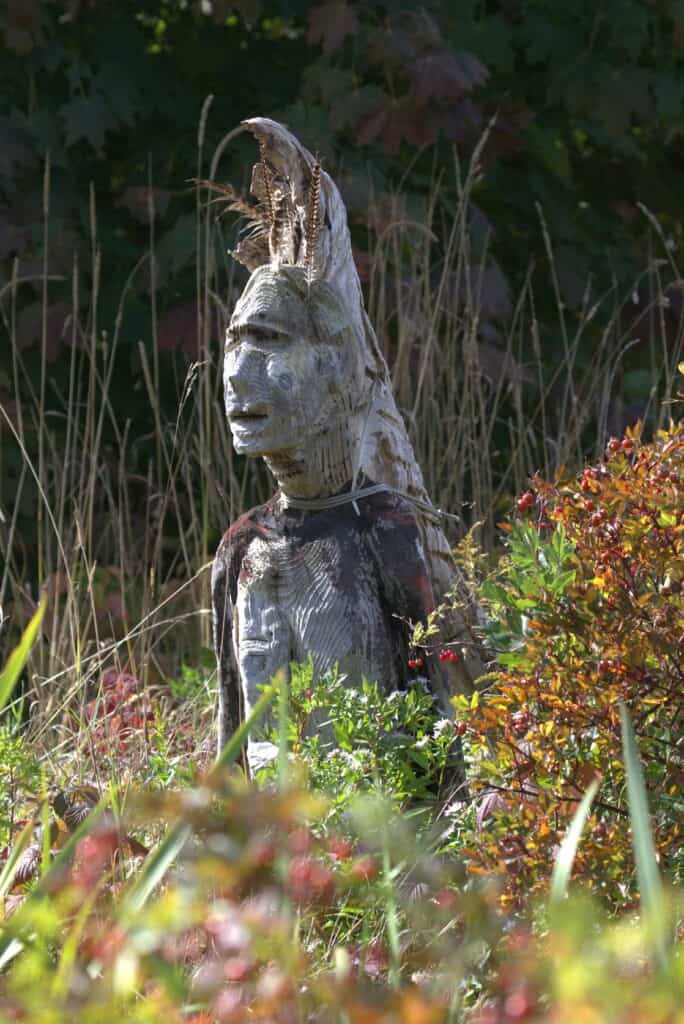
Monhegan Art photo by Brett Ewald
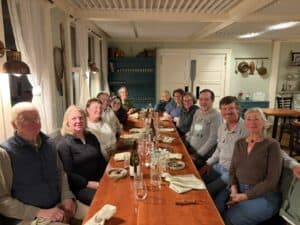
Monhegan Group
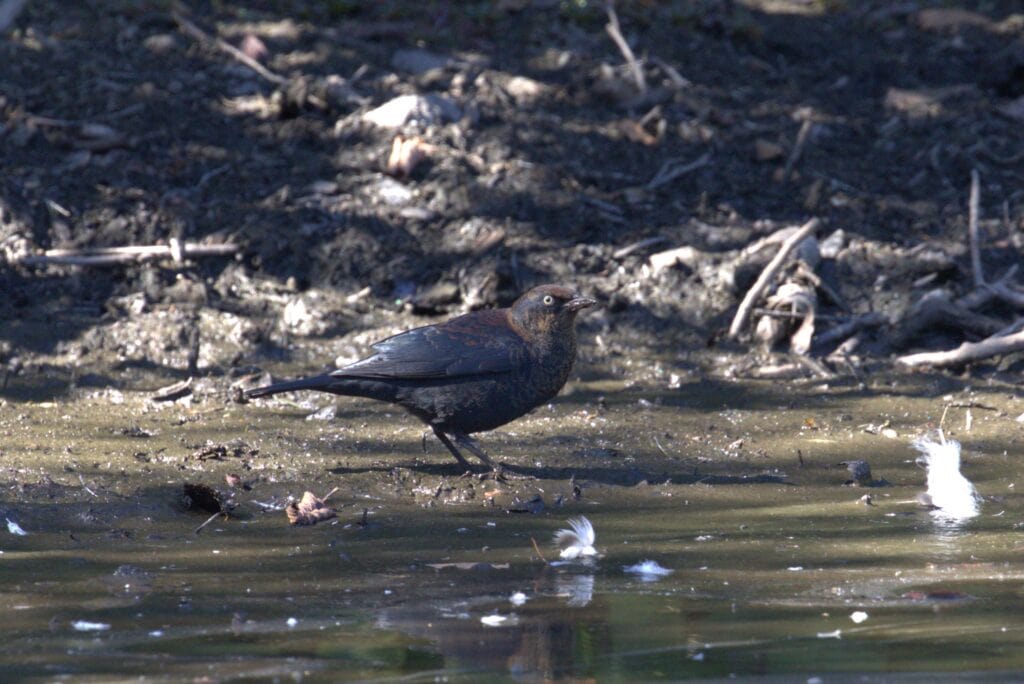
Rusty Blackbird Ice Pond photo by Brett Ewald
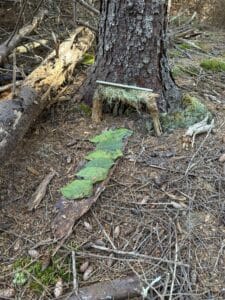
Fairy House photo by Brett Ewald