For the final time this season– greetings from the Montclair Hawkwatch! With the end of November comes the end of the hawk count season at Montclair. While we’re sad to see it come to a close, it’s a great time to look back at the wonderful month and season we had and look forward to the next one.
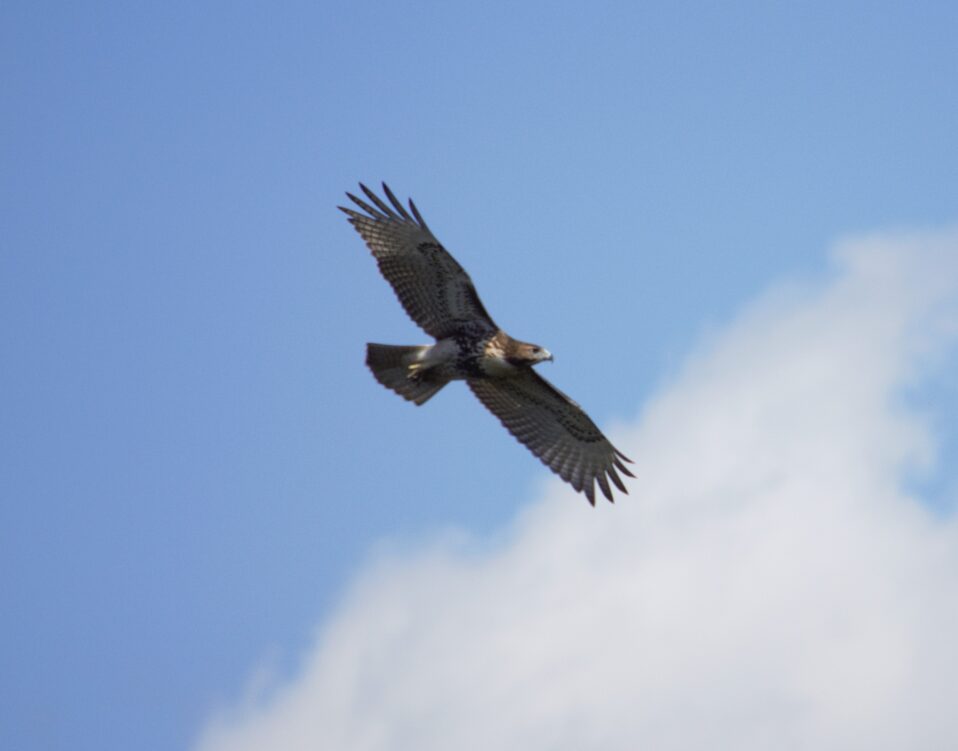
November generally marks the tail end of raptor migration for most species of birds, but it’s in no way middling. As the gales and cold fronts of November push on, species like Red-shouldered and Red-tailed Hawks become more prevalent and make up the bulk of our counted species. In particular, this November was a great month for Red-shouldered Hawks. On Saturday, November 15th, volunteer counters had 229 Red-shouldered Hawks pass through in the course of a few hours. By the end of November, the best of the Red-shouldered Hawk flight had worn off, but a handful more good days of 30-40 birds were enjoyed. While Red-tailed Hawks didn’t move in as high single-day numbers as Red-shoulders, they were consistent throughout the month. Likely, more Red-tailed Hawks will continue to migrate through early December as the doors of deep winter are unlocked and temperatures continue to drop.
Vultures also continued to migrate throughout November, albeit in smaller numbers than in October. More Black Vultures began to join the Turkey Vultures, with almost daily small flocks of Black Vultures moving through in the last week of the count. Many local vultures still remain– some of the vultures we’ve seen all season are likely non-migratory. The same is true for some of the local Red-tailed and Cooper’s Hawks, with known birds born this year remaining along with adults. We’ve watched these local juveniles grow and learn to hunt over the course of the season, and it’s great to be able to spend time with them while they’re still distinctive from the other adults.
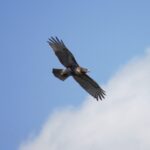
November is also likely the best month for some rarer species of raptors to pass through northeastern hawk counts, with counters and visitors alike always hoping for the big northern three– Golden Eagles, Rough-legged Hawks, and American Goshawks. We were lucky enough to have our second Golden Eagle of the year pass through the Hawkwatch on November 6th on a strong wind, a beautiful immature bird which circled out of the valley between the First and Second Watchung ridges and passed right over the platform, giving great views and photo opportunities.
Finally, the long-awaited winter finch irruption graced a few new species for this season’s count at the tail end of the season. While Purple Finch and Pine Siskin numbers continued, albeit less than in October, we were also graced with hearing or seeing species like Red Crossbill (Nov 18th), Evening Grosbeak (Nov 18th, 24th, and 27th). Often, we checked every goldfinch in every flock that passed by, whether they flew by or happened to land, for many of these species. Sometimes, we checked other migratory bird flocks for rarities– after all, it’s hard not to look in flocks of 200+ grackles, red-winged blackbirds, or skeins of geese.
Overall, November was a month of exemplary numbers, whether of songbirds, geese, or raptors, and exemplary species, whether rare raptors or finches. It was a fantastic way to close out the season, and I couldn’t have been happier to spend the season as a counter. Stay tuned for a final collection of Fall 2025 Montclair Hawkwatch data and sightings in the 2026 edition of The Peregrine Observer— we’ll have lots to talk about then. Until then, enjoy the birds, whether wintering species, migrants, or summer breeders.
– Peter Roy
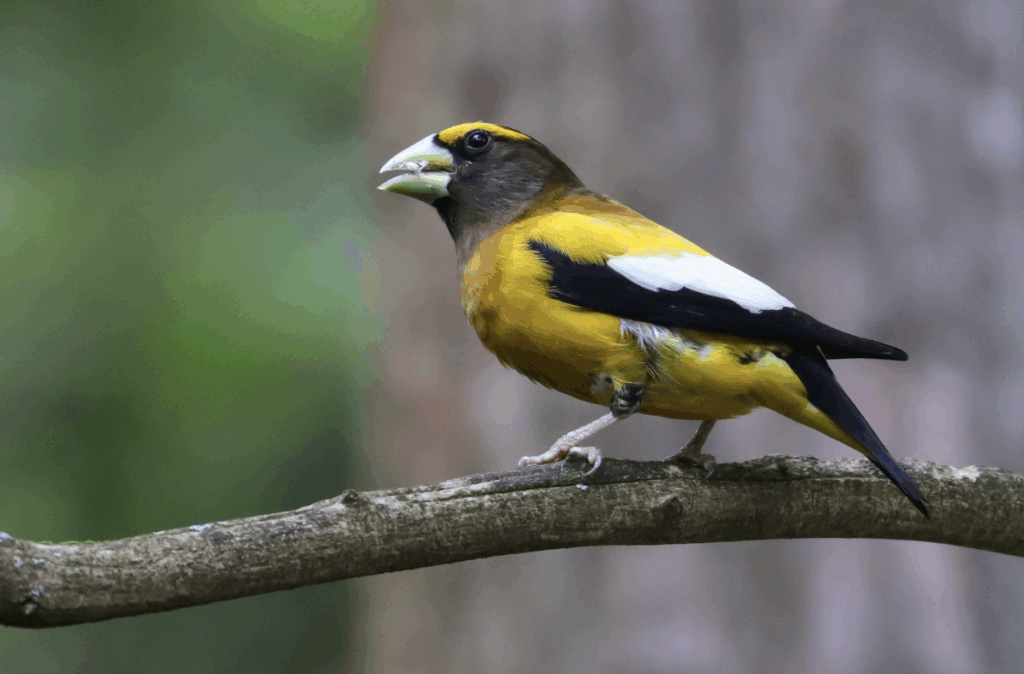
Evening Grosbeak by Martina Nordstrand
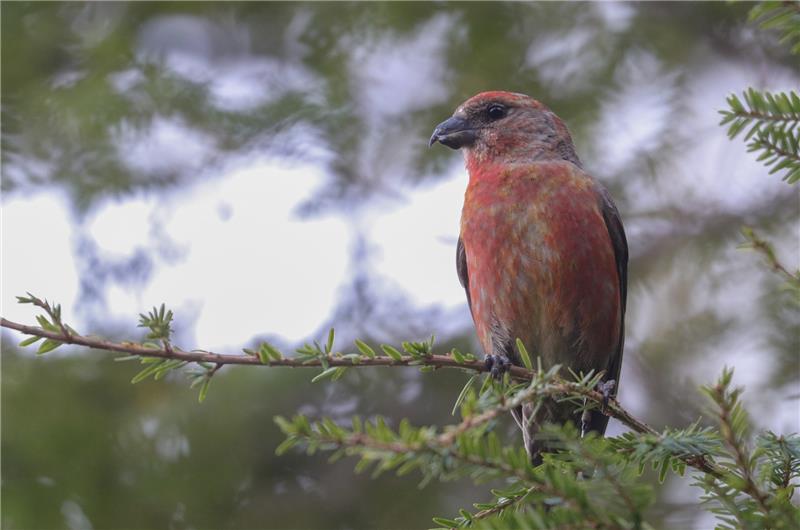
Red Crossbill by Martina Nordstrand