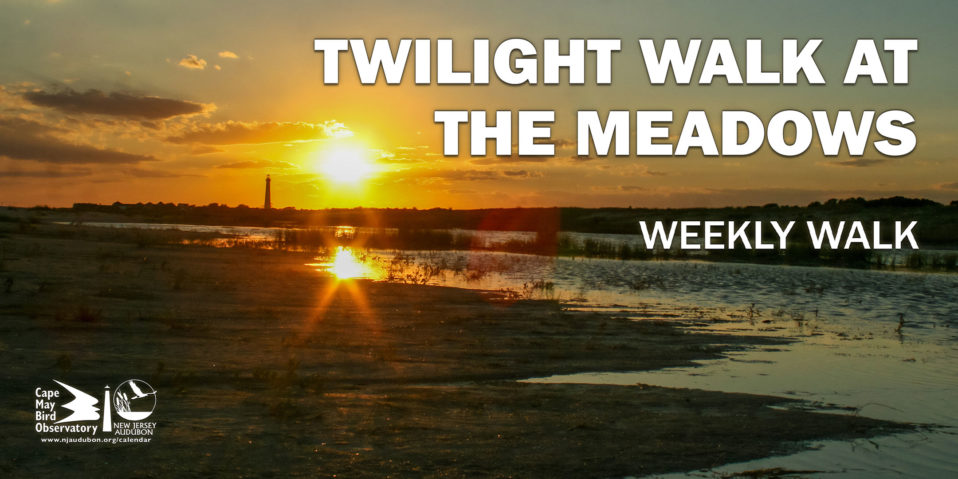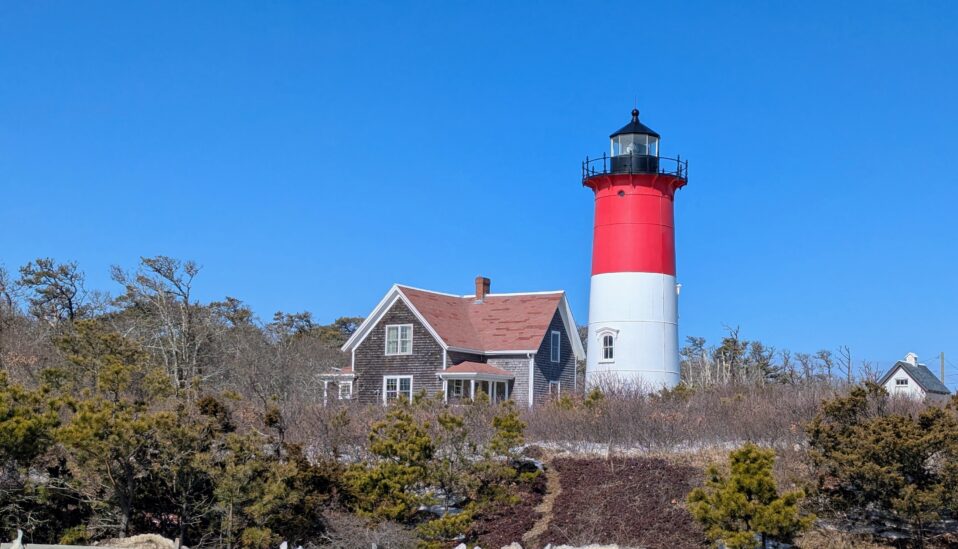
Every trip to Cape Cod should have at least one lighthouse photo! This is Nauset Light in Eastham. Photo by Scott Barnes.
Our tour was fortunate to coincide with a good stretch of nice weather in a winter that has been one of the coldest in a decade. Cape Cod extends some thirty miles east into the Atlantic, with much of the Lower Cape—the portion that looks like a forearm and clenched fist preserved within Cape Cod National Seashore. The mix of salt marshes, tidal creeks, coves, woodlands, and the Atlantic Ocean provide many beautiful places to explore. The influence of the sea and fauna that live there are never far away.
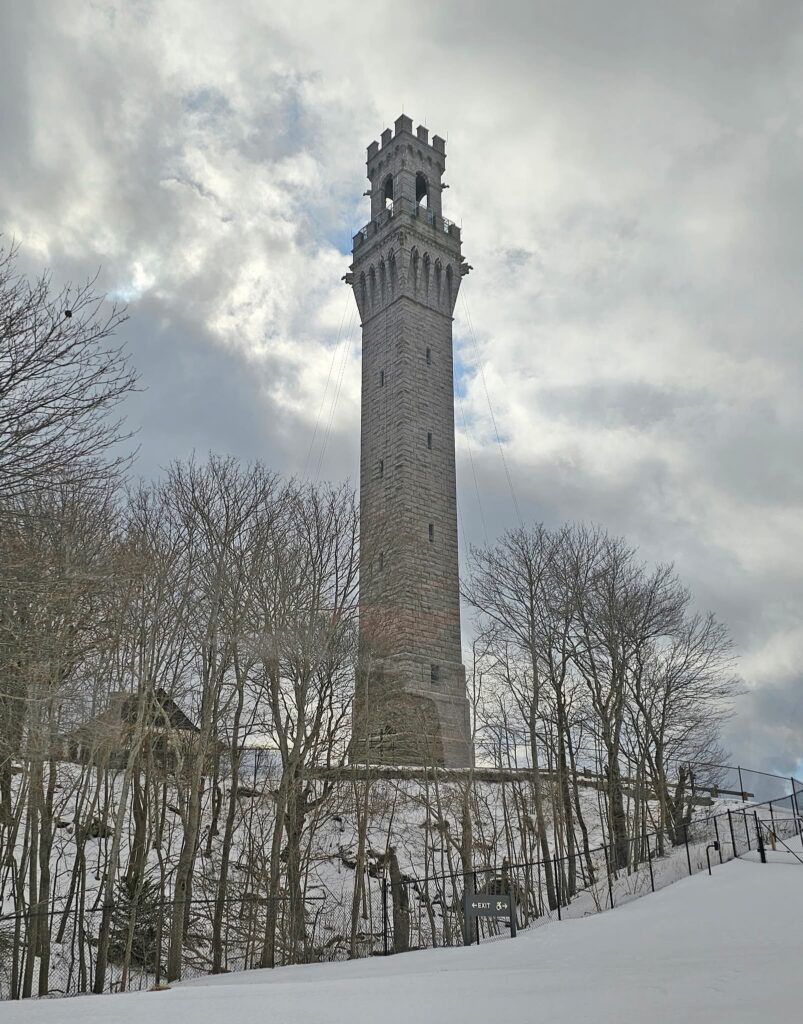
Overall field conditions were good. Temperatures ranged from morning lows in the 20’s to highs in the mid to upper 30’s. There were two days of mixed sun/clouds and two cloudy days. We really lucked out with three out of four days without significant wind, but a stiff north breeze greeted us at Provincetown. Thankfully due to “P ’town’s” strongly hooked shape, there’s usually somewhere to bird in the lee. Despite the warmer weather, relatively speaking, most freshwater was frozen, as were some smaller rivers, coves, and even bays. Many tidal flats and salt marshes were covered by impressive and large sheets of ice that glinted in the mid-day sun. The ground was almost completely blanketed with snow, which looked especially pretty as the floor to pine-oak woodlands. Only windswept beaches were snow-free. Dramatic and picturesque scenery surrounded us as we delved into some of the many interesting spots that make Cape Cod such a cool place to watch birds.
An active and noisy flock of Common Eiders were fun to watch at the Cape Cod Canal. Video by Scott Barnes.
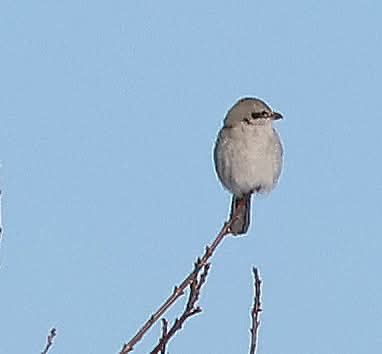
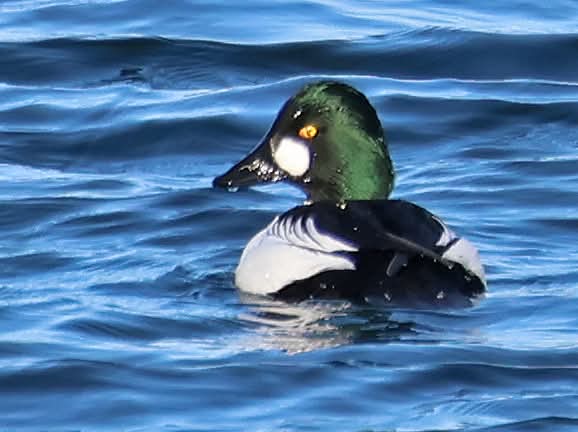
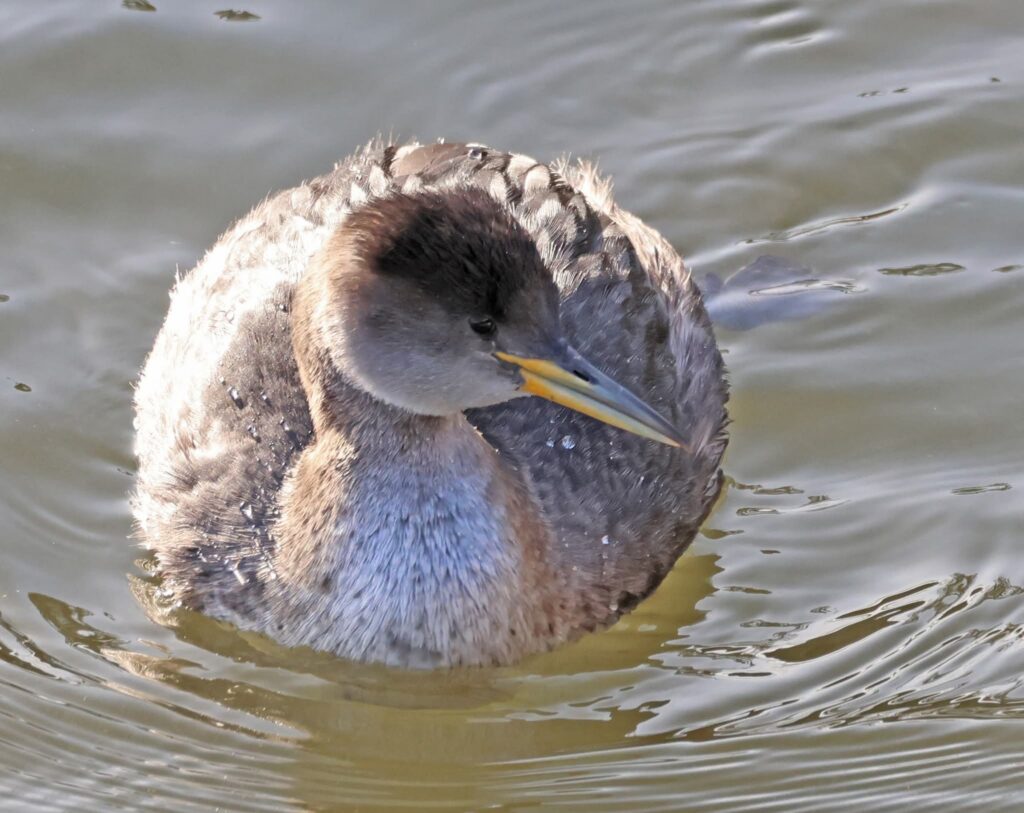
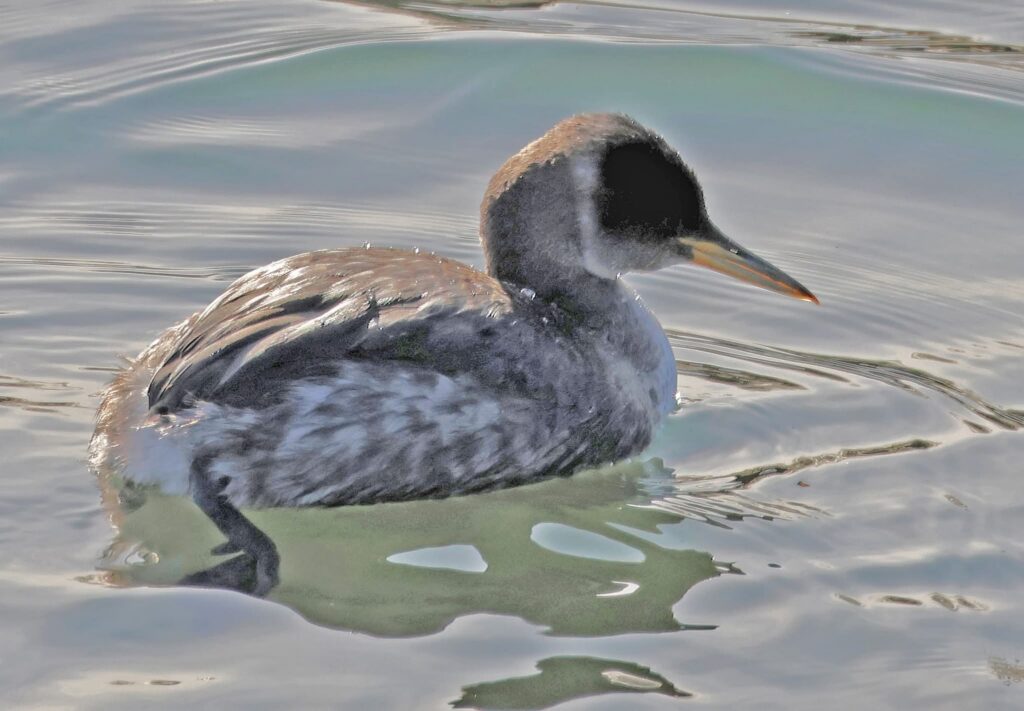
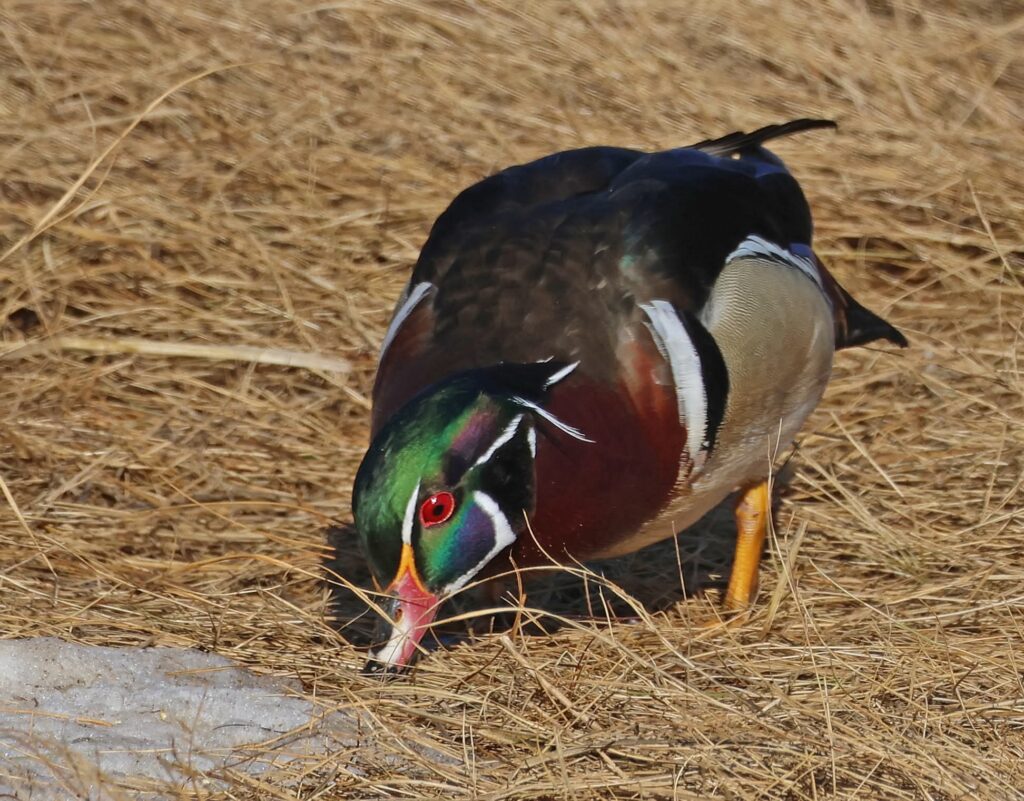
Highlights included watching thousands of Common Eiders and other sea ducks, especially at Scusset Beach Reservation where close flocks were noisy with vocalizations, furious bathing, and courtship. Town Cove was an enjoyable stop with abundant sunshine, calm winds, and up-close looks at Wood Ducks and a drake Northern Pintail. MacMillan Wharf is always fun with close up looks at waterbirds—we had a small flock of beautiful Harlequin Ducks that flew right past us and a cooperative Red-necked Grebe practically at our feet. Common Eiders and all three species of scoters were evident almost everywhere we went, and we enjoyed close-up views of striking male White-winged Scoters with their “Nike swoosh” white eye arcs, black upperparts, and contrasting brown flanks. Several Iceland Gulls were present in Provincetown and a first-cycle gave us a close look as it flew low over our heads at Race Point Beach. Scarce/rare species that we encountered were a hen Barrow’s Goldeneye (we missed a few males that were floating around the Cape), an adult Black-headed Gull near Hyannis, 2 Thick-billed Murres, both of which were rapidly paddling their way along the shoreline and disappeared after a few minutes as if they were on a mission, and a Northern Shrike actively hunting the scrub-shrub habitat at Crane WMA.
Thanks to everyone who joined the tour and for your support of NJ Audubon Eco-Travel. It was a pleasure to travel and bird with you all!
By Scott Barnes, Senior Naturalist, New Jersey Audubon