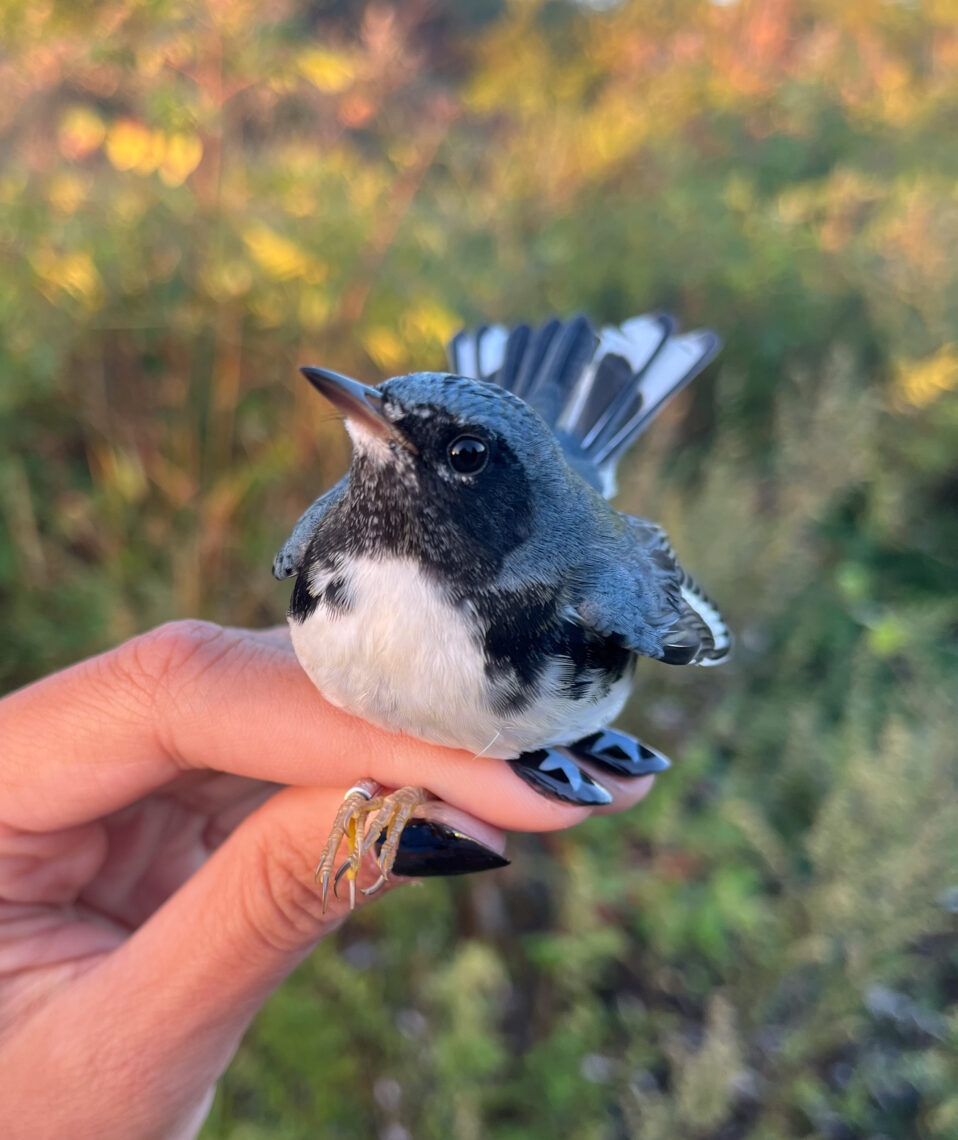
The 2026 Cape May Songbird Stopover Project is officially underway! Banding began Tuesday, August 18, with 32 captures, kicking off a hot, sunny, humid, and occasionally windy start to the season. Despite an unusually high number of mosquitoes, our banders persisted and processed a total of 764 birds. Impressive!
This year’s banding team is composed of an entirely new crew to Cape May, with Head Banders, Vicki Morgan and Axel Rutter, along with a banding technician, Lisa Viviano. Dr. David Mizrahi, NJ Audubon’s VP for Research and Monitoring, is the project lead, with the help of Lena Usyk, the project’s co-lead.
Continuing last year’s trend, American Redstarts and Northern Waterthrushes dominated the August migration list, in addition to frequent appearances by Northern Yellow Warblers, Traill’s Flycatchers, Common Yellowthroats, Gray Catbirds, and Ruby-throated Hummingbirds.
In recent years, the Cape May Songbird Stopover Project has focused increased efforts on tracking the migration of Northern Waterthrushes. Continuing that work this year, our banders have caught and banded an impressive 75 unique Northern Waterthrushes in August alone. Four lucky candidates were fitted with solar-powered VHF radio transmitters on August 26th to help us further understand how long birds stay on the Peninsula during migration stopovers and how they use habitats during stopovers.
August also brought some remarkable days at the banding station. On August 26, a flush of 124 newly banded American Redstarts pushed the station to a record 212 birds in a single day, the highest August total in the project’s history.
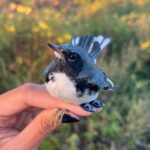
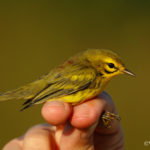
Species highlights included a Golden-winged Warbler on August 26th, Cape May Warbler on August 27th, and Chestnut-sided Warbler on August 29th, and an American Woodcock on August 31st.
The Golden-winged Warbler was a particularly exciting capture. Golden-winged and Blue-winged Warblers frequently hybridize, with the two species sharing 99.7% of their genetic makeup despite their distinct appearances. This individual showed nearly all of the characteristics of a Golden-winged Warbler, making it a memorable bird for the banding team. And, in an ironic twist, Cape May Warblers are known for not spending much time in Cape May!
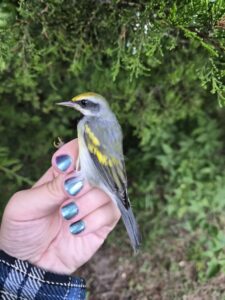
Golden-winged Warbler photo by Lena Usyk
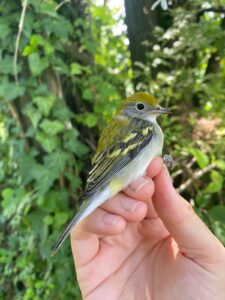
Chestnut-sided Warbler photo by Lisa Viviano
With fall just on the horizon and cooler temperatures ahead, we’re looking forward to more northwest winds, more birds, and plenty of surprises at the banding station in the weeks to come.
All bird capture, handling, and banding are authorized under appropriate USGS state and federal permits.