After an incredibly active and productive second week, the third week of the Songbird Stopover Project took on a noticeably quieter pace. The shift in pace was largely due to persistent southerly winds that didn’t favor migration into the South Cape May Meadows, where the project is based. These less-than-ideal weather conditions meant that fewer birds were moving through the area, resulting in slower days at the banding station.
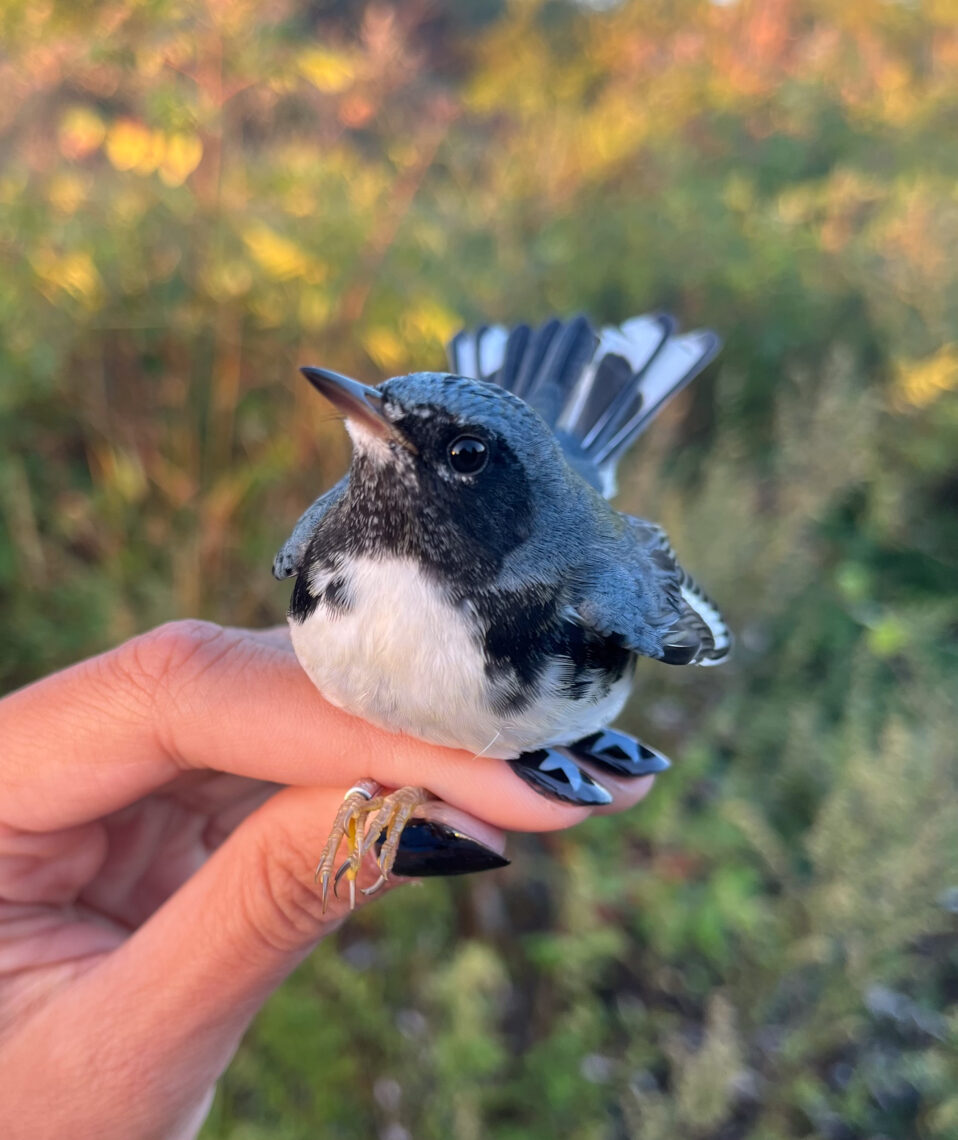
Despite the lull, the team still safely banded and released a total of 176 birds during the week. Notably, two first-of-the-season species were encountered: an adult male American Goldfinch and a juvenile European Starling. Another highlight from the week came in the form of a Northern Waterthrush exhibiting leucism in its flight feathers—a rare and striking sight that stood out among the more routine captures.
With the slower pace, the team took advantage of the downtime to catch up on essential behind-the-scenes work. Time was spent inputting banding data from the previous two weeks to ensure accurate and up-to-date records. The quieter days also provided a perfect window for doing some much-needed maintenance on the equipment, helping to ensure that everything remains in top shape for the weeks ahead. As always, each bird counted is another data point in understanding migration, even during a slower stretch like this one.
All bird capture, handling, and banding are authorized under appropriate state and federal permits.
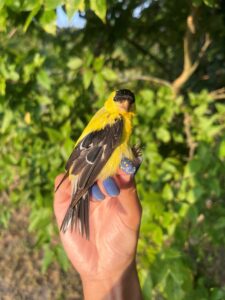
Adult Male American Goldfinch photo by Maia Nguyen
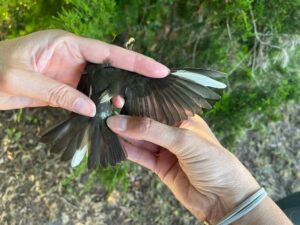
Leucistic Northern Waterthrush photographed by Noah Nei
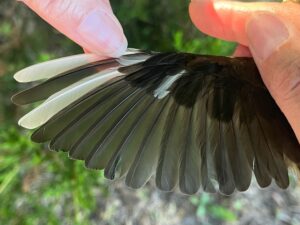
Leucistic Northern Waterthrush photographed by Noah Nei
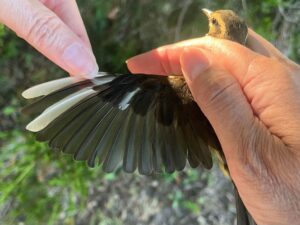
Leucistic Northern Waterthrush photographed by Noah Nei