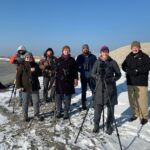
Banner photo: A chilly morning on the 2024 NJ Audubon Minnesota in Winter Eco-Tour. Photo by Scott Barnes.
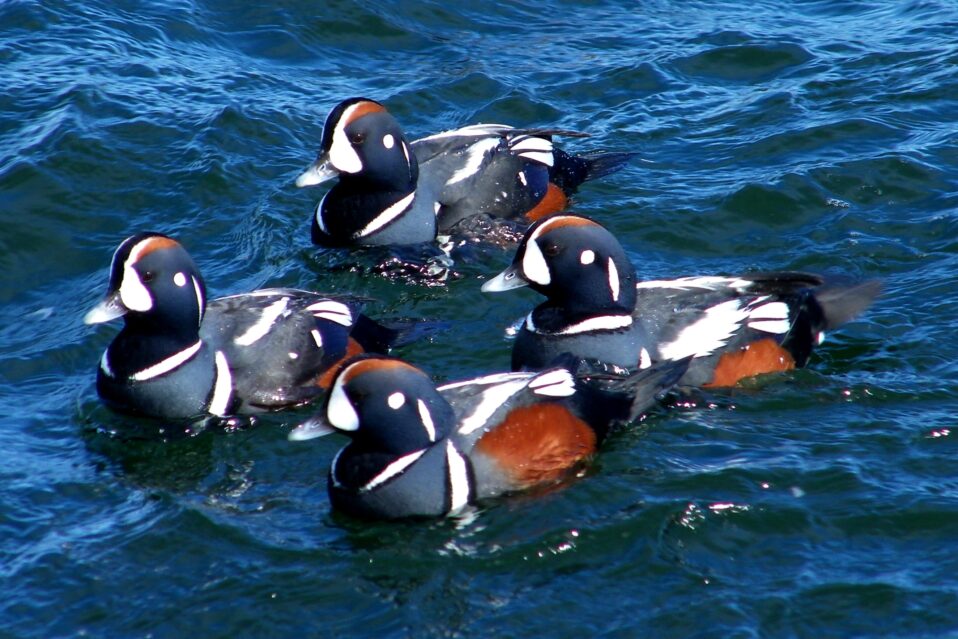
Cover photo: Drake Harlequin Ducks at Barnegat Inlet. Photo by Scott Barnes
Winter birding in the Garden State has its joys and challenges. Our parks, refuges, and open spaces are less crowded, you don’t have to slather on gobs of sunscreen, bring a gallon of water to stay hydrated, and protect yourself against a host of biting insects. It’s also the best time of year for waterfowl diversity and to see certain species of birds that are rare, local, or generally scarce like Rough-legged Hawk, Short-eared and Snowy Owls, Glaucous and Iceland Gulls, Razorbill, Snow Bunting, Lapland Longspur, and in some years finches like Redpoll and Evening Grosbeak.
Many of us don’t relish the cold temperatures and stiff winds that accompany the short winter days. Preparing for the weather with proper clothing and some strategies for how to bird can make for some enjoyable experiences.
Start with a good base layer, both top and bottom. Flannel-lined pants are warm and thicker, which helps protect again the wind. Warm shirts or a sturdy fleece for your torso are good bets and bring a vest to layer up or off as temperatures dictate. A giant heavy coat with only a regular shirt underneath isn’t a good choice, in my opinion. Don’t wear all your layers in the car, unless it’s a short drive between birding spots. Save some of those outer layers for the field—if you wear them all in the warm car, you’ll probably feel cold when you step outside and have nothing additional to wear.
Choose footwear that is waterproof/water resistant for morning dew or frost, slush, puddles and mud. Remember that rubber bottomed boots conduct the cold.
Thick warm socks make a big difference, just make sure your shoes aren’t too tight with them on. Sock liners help if you are prone to sweating through your feet, a problem some people experience even in cold weather.
A calm, bright, and sunny day at 25 degrees can be surprisingly tolerable. Wind is often your worst adversary. A hooded, wind-proof jacket or outer shell can make a big difference keeping you from chilling down, especially if you’re not moving around much. Think scanning the ocean in January or waiting for the appearance of nocturnal birds at dusk. Windproof, insulated gloves help keep your hands warm as you hold your cold binoculars or spotting scope. If it’s frigid, try a thin pair of gloves with loose mittens over them. Rain pants can double as wind pants to block a damp onshore breeze while you’re watching the Harlequin Ducks at Barnegat Light or waiting for Short-eared Owls to start hunting over a frosty meadow.
Hand and foot warmers are your friends. You can use disposable heated packets, or you can buy rechargeable ones. The ones I use have four temperature settings and will last 8 hours on the lowest setting. A warm hat that keeps your ears covered is another must.
Try birding places that are in the sun and out of the wind if possible. This is often where the birds want to be as well. Waterfowl often seek shelter from the wind in protected coves, on the leeward side of the lake, and in the warmth of the sun. Passerines (songbirds) especially dislike strong winds, so ideally finding warm, protected, and sunny spots are where you’ll likely find more birds. A strong cold snap can work to your advantage by concentrating waterbirds on whatever little open water remains, generally in larger waterbodies or rivers and bays. Sometimes I see dabbling ducks on the open ocean for a day or two after all the freshwater has frozen over.
Insects can be active in cold weather. Okay, not as much as during summer months, but you can watch birds like Yellow-rumped Warblers or tough little Ruby-crowned Kinglets sally out to snatch tiny bugs mid-air during chilly temperatures. I’ve watched Tree Swallow flocks in early winter zipping up the beach on a sunny day, capturing active insects over the wrack-line. Any spot you find the combination of insects and sun in winter is worth a quick look.
Find the food! Many species of songbirds actively consume berries and seeds—old fruit orchards, crabapple trees, multiflora rose patches, and bittersweet vine tangles may attract a variety of frugivores. American Robins and Cedar Waxwings are quite fond of American Holly stands. Conifer trees with ample cone crops may be good places to search for winter finches. American Goldfinch, Purple Finch, and Pine Siskins like extracting seeds from Sweetgum trees.
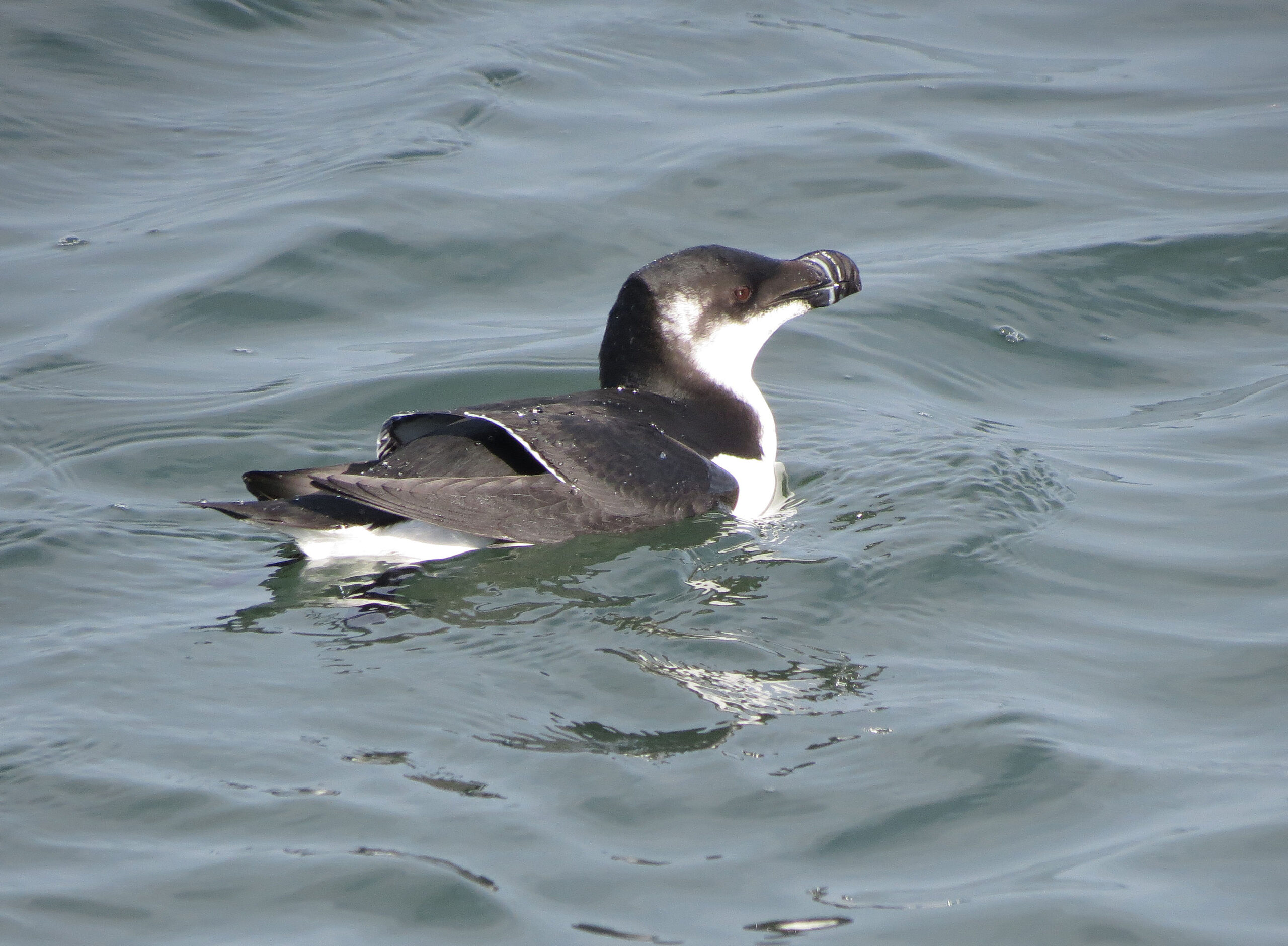
Winter birding in part concentrates on families like waterfowl, gulls, grebes, and loons, making waterfront areas, boat ramps, scenic overlooks, or a local boat marina all promising places to check. You can probably do a decent to excellent job looking from the warmth of your vehicle if necessary. Car birding isn’t going to help you get your daily steps in, but it’s a viable alternative when field conditions are poor. I can bird the coastal ponds of Monmouth County pretty well from my car when the wind chill is in the teens or there’s rain. The wildlife drive at Forsythe National Wildlife Refuge is great in foul weather, too.
Cruise the back roads. Rural areas in parts of New Jersey can be good places to watch for geese, raptors, and other open-country species including Horned Lark. Parts of Warren, Salem, Burlington, and Cumberland Counties come to mind. Of course, use caution, watch your rear-view mirror, and pull off to the roadside as much as you can while watching birds. After any significant snowfall, wait a day or so and check out where roadside patches have thawed a bit. Many species of woodland birds will come to roadsides where sunlight melts away the edges of the snow first. This is a good way to look for American Woodcock in south jersey. Any place where the is open ground in a snow-covered landscape is worth checking.
Embrace the four seasons of birding in New Jersey. Even in winter there are many species of birds to see in our great state. As birders, we are lucky to live here.
To see our schedule of birding field trips go HERE
By Scott Barnes, Senior Naturalist-Cape May Bird Observatory