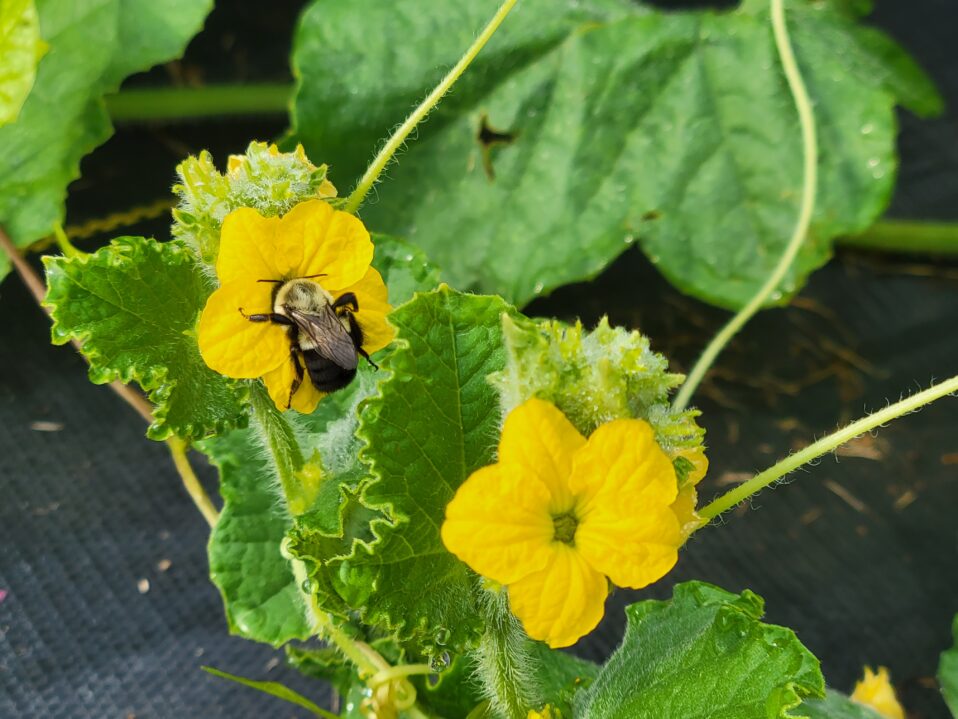
Photo: Bumble bee on squash plant – Celia Vuocolo
What is a pollinator? Why are they important?
Welcome to National Pollinator Week! We will be highlighting all the things that New Jersey Audubon does to conserve, support and protect our pollinators over the next seven days.
What is a pollinator? A pollinator is any animal that moves pollen between the male part of the plant to the female part, either on the same flower or between different ones, which enables fertilization. This is not intentional—it is purely accidental! Pollinators are only interested in collecting pollen or nectar to either feed to their young or themselves. During the process, pollen sticks to the animal and moves with them from flower to flower.
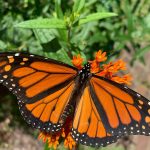
Pollinators can be birds and mammals in other parts of the world, but in New Jersey, our pollinators are primarily insects except for the hummingbird. Most folks know about honeybees or the Monarch butterfly, but did you know that New Jersey has over 350 species of bees? Moths, flies, wasps, beetles, ants, and other insects also act as pollinators. Pollinating animals are critical for plant reproduction and are responsible for pollinating 35% of the world’s food crops and 75% of flowering plants on Earth.
Unfortunately, pollinators are under threat from climate change, habitat loss, disease, insecticide use, and invasive species. Over the next week you will learn about how NJ Audubon works to help our pollinators and what you can do to join in!